
How Hiring Professional Movers in Washington DC Eliminates Packing Stress and Moving Day Logistics

Professional movers can handle packing, furniture preparation, disassembly, loading, transportation, unloading, and room-by-room placement so you do not have to manage every task yourself. The moving plan depends on home size, furniture volume, access conditions, stairs, elevators, parking, travel distance, packing needs, and destination requirements. With the right crew, one organized plan replaces dozens of separate decisions.
- Packing can be handled before moving day, not in a last-minute rush
- Large furniture may need disassembly before it fits through doorways
- Building access and elevator rules directly affect the schedule
- Loading order influences both efficiency and item protection
- Moving costs depend on actual project conditions, not guesswork
Moving Day Starts Before the Truck Arrives
A successful move is decided in the days before the truck pulls up. Planning, packing, furniture preparation, and access coordination all shape how smoothly moving day runs. When these steps happen early, the crew can focus on safe handling instead of solving preventable problems.
A local move sounds simple until everything needs attention at once. Boxes pile up, the sectional will not fit through the hallway, the elevator needs a reservation, and the loading zone sits half a block away. Many families and apartment residents in Washington, DC discover this the hard way.
Poor coordination creates real consequences. Rushed packing leads to unlabeled boxes. Blocked hallways slow the crew. Missing hardware delays bed reassembly. Delayed loading pushes the whole schedule into the evening.
Working with professional movers in Washington DC turns that chaos into one organized plan. Packing, furniture disassembly, transportation, and destination setup get coordinated as a single project instead of separate emergencies.
What Early Planning Actually Covers
Before the truck arrives, a well-run move typically includes:
- A household inventory review covering furniture, boxes, and specialty items
- A packing schedule for kitchens, bedrooms, and storage areas
- Confirmation of elevator reservations and loading zone access
- A disassembly list for beds, tables, and large shelving
- A destination plan for room-by-room furniture placement
This preparation is where professional residential moving shows its value. Professional residential moving means coordinating packing, furniture preparation, loading, transportation, unloading, and placement according to the household inventory, property access, travel requirements, and agreed moving plan. Teams that provide professional residential moving services build this planning into the job from the start.

Packing Changes the Entire Moving Timeline
Professional packing reduces the workload homeowners must complete themselves. Instead of spending weeks collecting boxes and wrapping dishes after work, you can hand the process to a crew that packs homes every day. The timeline shortens, and the boxes arrive organized.
Packing is rarely one task. It is a dozen small decisions repeated across every room. A professional approach covers far more than most people expect.
What Professional Packing Includes
- Sturdy boxes sized correctly for books, kitchenware, and decor
- Packing paper and cushioning for fragile items like glassware and artwork
- Wardrobe solutions for clothing that stays on hangers
- Protective wrapping for electronics, televisions, and small appliances
- Furniture blankets for dressers, tables, and upholstered pieces
- Extra care for specialty items such as mirrors, lamps, and instruments
- Help with last-minute packing that always appears on moving morning
Why Room-Based Labeling Pays Off
Labeling by room sounds obvious, yet it changes the entire unloading experience. A box marked "kitchen, upper cabinets" goes straight to the right space. A box marked "misc" becomes tomorrow's mystery.
Organized packing also speeds up the crew. Movers can group boxes by destination room on the truck, which means faster unloading and fewer trips back and forth. For renters moving between apartments in DC, Maryland, or Northern Virginia, that efficiency matters when elevator reservations have fixed windows.
Keep in mind that careful packing reduces risk but cannot prevent every possible item from being damaged. Honest preparation and realistic expectations go together.

Large Furniture Needs a Disassembly Plan
Large household furniture often needs partial or full disassembly before it can leave the home. Beds, sectionals, and dining tables were frequently assembled inside the room, so they may not exit through the same doorway. A disassembly plan prevents moving-day surprises.
Tight hallways, narrow staircases, and small elevators are common across Washington, DC row houses and apartment buildings. Furniture disassembly turns an impossible carry into a manageable one.
Furniture That Commonly Comes Apart
- Bed frames, platform beds, and large headboards
- Sectional sofas that separate into individual pieces
- Dining tables with removable legs or leaves
- Wardrobes and armoires too tall for stairwell turns
- Desks, office shelving, and modular storage units
- Entertainment centers with detachable components
Hardware Labeling Saves the Reassembly
Every screw, bolt, and bracket should go into a labeled bag taped to the furniture piece it belongs to. This simple habit prevents the classic end-of-move problem: a bed frame with no bolts and no idea where they went.
Protective wrapping matters just as much. Disassembled panels and headboards travel safer when wrapped in furniture blankets and stretch wrap. That said, not every item can be dismantled, and not every piece fits through every property. Some furniture requires creative angles, door removal, or a honest conversation about alternatives. For delicate or high-value pieces, some households also arrange white glove furniture delivery services for added handling care on specific items.

Washington DC Access Can Make or Break the Schedule
Moving inside Washington, DC requires more planning than simply loading a truck. Parking restrictions, elevator reservations, narrow streets, and building management rules all shape the schedule. Confirming these details before moving day keeps the job on track.
The District's housing mix creates unique challenges. A fourth-floor condo near Dupont Circle moves very differently from a townhouse in Capitol Hill or a garden apartment in Silver Spring.
Access Factors Worth Confirming Early
- Parking and loading zones. Many DC streets require permits or have strict time limits. Limited curb access can mean long carries from truck to door.
- Elevator reservations. Apartment and condominium buildings often require advance booking, protective padding, and fixed move-in or move-out windows.
- Building management rules. Some properties require certificates, specific hours, or service-entrance use.
- Staircases and long carries. Row houses and walk-ups add time with every flight.
- Narrow streets. Tight blocks can limit where a truck parks or how long it can stay.
Customers should confirm all applicable parking, building, elevator, and loading requirements before moving day. No mover can guarantee parking access or building approval, so early confirmation protects your schedule. Crews experienced in Washington DC local moving services know these patterns because they navigate them daily.

Moving Costs Depend on the Move
Moving costs depend on the actual project scope and site conditions, not a flat formula. Home size, furniture volume, packing needs, access difficulty, and travel distance all push the scope up or down. Understanding these moving cost factors helps you budget realistically.
A small apartment with elevator access is a very different job from a multi-story townhouse with heavy furniture and limited parking. The first may take a small crew a few hours. The second involves stairs, disassembly, and long carries that extend the day.
Factors That Shape Your Moving Quote
| Factor | How It Affects Scope |
|---|---|
| Home size and furniture volume | More rooms and pieces mean more labor and truck space |
| Number of boxes and packing needs | Full packing service adds time; self-packing reduces it |
| Furniture disassembly | Each piece taken apart and rebuilt adds handling time |
| Stairs, elevators, and long carries | Difficult access slows loading and unloading |
| Parking and walking distance | Remote truck placement extends every trip |
| Travel distance and number of stops | Longer routes and extra stops add time |
| Heavy or specialty items | Pianos, safes, and large appliances need extra planning |
| Storage requirements | Split deliveries or storage drops add coordination |
| Timing and building restrictions | Fixed windows and peak dates affect scheduling |
| Crew requirements | Larger or complex moves need more hands |
For a deeper breakdown of
factors affecting professional moving costs, it helps to see how each variable interacts with the others. The key point is simple: accurate quotes come from accurate information about your home, your furniture, and your access conditions.
Loading Order Matters More Than Most People Think
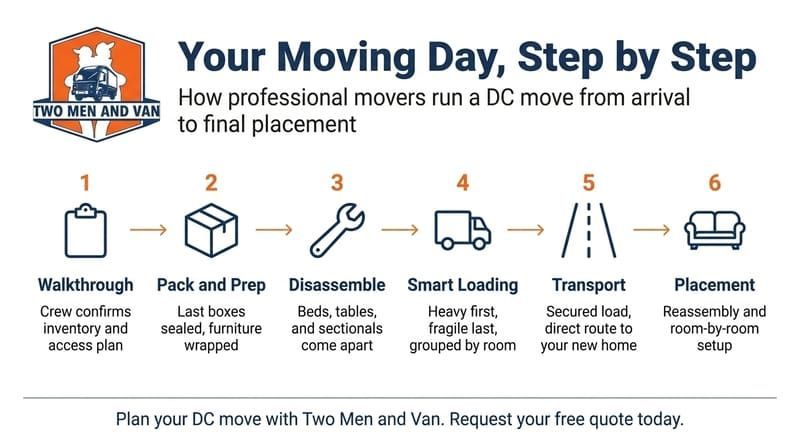
Movers coordinate the job from arrival through final placement, and loading order sits at the center of that plan. Heavy, sturdy items go in first as a base. Fragile and destination-priority items load last so they come off first. Smart sequencing protects your belongings and shortens the day.
A typical moving day follows a clear rhythm. The crew starts with an initial walkthrough to confirm the inventory and access plan. Packing completion comes next, followed by furniture disassembly and protective wrapping.
Then loading begins. Item weight, fragility, destination room, and unloading sequence all influence where each piece lands on the truck. Dressers and appliances form the base layer. Boxes stack by room. Fragile items ride secured on top or in dedicated spaces.
Why This Sequence Protects Your Move
- Items needed first at the destination unload first
- Heavy furniture stays stable at the truck's floor level
- Fragile pieces avoid pressure from shifting weight
- Room-grouped boxes unload together, speeding up placement
At the destination, the process reverses with the same discipline. The crew confirms access, unloads by room, reassembles furniture, places pieces where you want them, and finishes with a final walkthrough. Whether the destination is a DC condo, a Maryland townhouse, or a Northern Virginia apartment, that structure keeps the day predictable.
Why Choose Our Team
Two Men and Van provides moving, packing, furniture disassembly, loading, unloading, and relocation support for residential customers across the region. Our team helps reduce moving-day guesswork by coordinating the details that usually fall on the homeowner.
We support organized relocation planning for apartment moves, home moves, and household relocations of every size. From protective wrapping and loading coordination to room-by-room furniture placement, our approach can make household moves easier to coordinate. Clean work practices and professional project coordination help customers manage packing and furniture logistics without juggling separate vendors. Final scheduling depends on availability and property requirements, so reaching out early always helps.
Book Your Washington DC Move
Packing, furniture disassembly, property access, loading, transportation, and destination placement can all be coordinated through one professional moving plan. Instead of managing each task separately, you get a single team that handles the sequence from first box to final walkthrough. That is what experienced professional movers in Washington DC bring to a local relocation.
If you are comparing options, take a moment to look through our residential moving and packing services and see how the pieces fit together for your home.
Ready to talk through your move? Request a local moving quote and let us know what your relocation involves.
Frequently Asked Questions
What do professional movers in Washington DC handle?
Professional movers in Washington DC typically handle packing, furniture disassembly, protective wrapping, loading, transportation, unloading, reassembly, and room-by-room placement. The exact scope depends on your home, access conditions, and the services you select.
Can movers pack my home before moving day?
Yes. Many households schedule packing a day or more before the truck arrives. This keeps moving day focused on loading and transport instead of last-minute boxes.
Will movers disassemble my furniture?
Most movers disassemble common items like bed frames, dining tables, and sectionals, then reassemble them at the destination. Hardware gets labeled and secured so nothing goes missing. Not every item can be taken apart, so ask during the estimate.
What factors affect the cost of hiring movers?
Home size, furniture volume, packing needs, stairs, elevators, parking distance, travel distance, and specialty items all affect cost. Building restrictions and timing can also shape the final scope.
Do stairs and elevators increase moving time?
They can. Every flight of stairs adds carrying time, and shared elevators often work on reserved windows. Confirming access details early helps the crew plan accurately.
How should I prepare for a Washington DC apartment move?
Confirm your building's elevator reservation, move-out window, and parking or loading rules first. Then declutter, label boxes by room, and set aside essentials you will carry yourself.
Can movers reassemble furniture at the destination?
Yes, reassembly is a standard part of most full-service moves. Labeled hardware and a room placement plan make the process faster and more accurate.
How early should I book professional movers in Washington DC?
Booking several weeks ahead is wise, especially for month-end and summer dates when demand rises. Final scheduling depends on availability and your property's requirements, so earlier is always better.
Connect With Us
Stay connected with us for moving tips, customer stories, special promotions, and behind-the-scenes content. Follow Two Men and Van on social media to get helpful advice and updates on our services across Maryland, DC, Northern Virginia, Pennsylvania, and Delaware.
- Facebook - Join our community for moving tips and seasonal offers
- Instagram - See real moves, packing hacks, and customer testimonials
- Instagram Washington - Follow our Washington area team for local moving insights
Get inspired, ask questions, and see why thousands of customers trust Two Men and Van for their interstate and local moves.