
Moving Heavy Garage Shelving? How Professional Movers Protect Your Gear and Your Walls
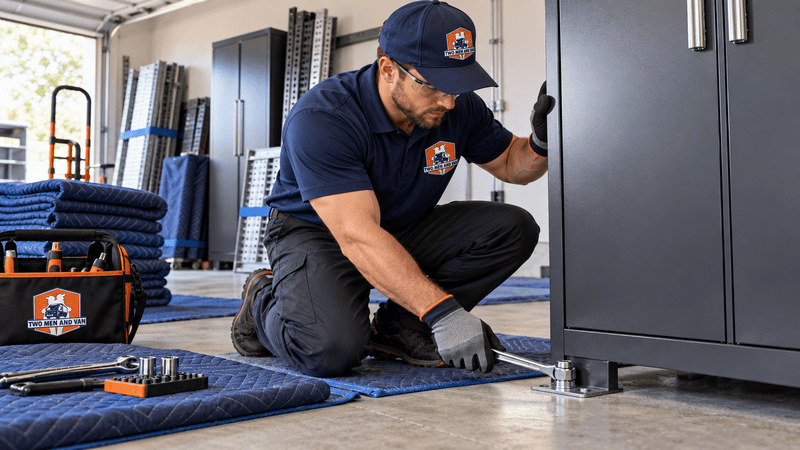
Moving heavy garage shelving requires far more than lifting. Steel racks, mounted systems, cabinets, and workbenches often need careful disassembly, protective padding, and controlled transportation before they can leave the garage. The right approach depends on shelving type, weight, wall mounting method, garage layout, access points, stored equipment, flooring, and your relocation needs.
- Heavy shelving creates serious moving challenges when loaded
- Mounted storage needs careful removal to protect walls
- Proper protection helps reduce property damage risks
- Specialized handling improves transportation efficiency
- Professional movers save time during renovations and relocations
Heavy Garage Storage Requires More Than Basic Moving
Garage shelving looks simple until moving day arrives. Then a loaded steel rack weighs several hundred pounds, a wall-mounted track refuses to release its anchors, and an overhead platform blocks the only exit path. Forcing these systems through tight garage entrances can gouge drywall, scratch vehicles, crack concrete, or bend the equipment itself. Professional garage shelving relocation offers a practical solution.
Our team assess each system, plan the breakdown, and move everything with far less risk than a DIY attempt.
Steel Shelving Systems Need Careful Breakdown Before Transport
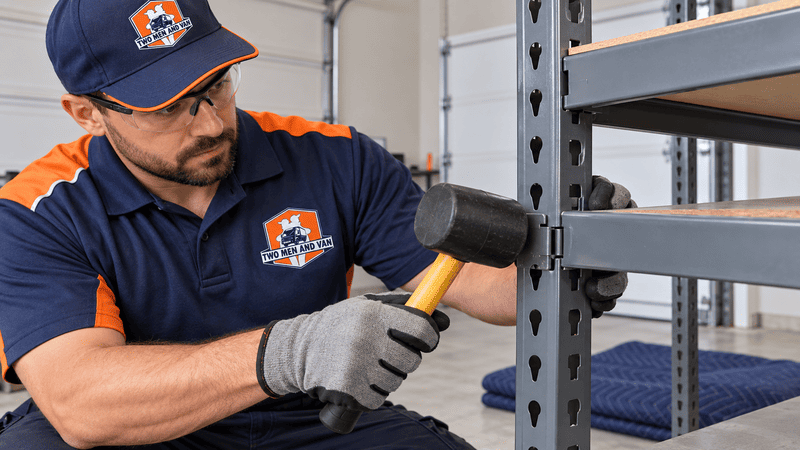
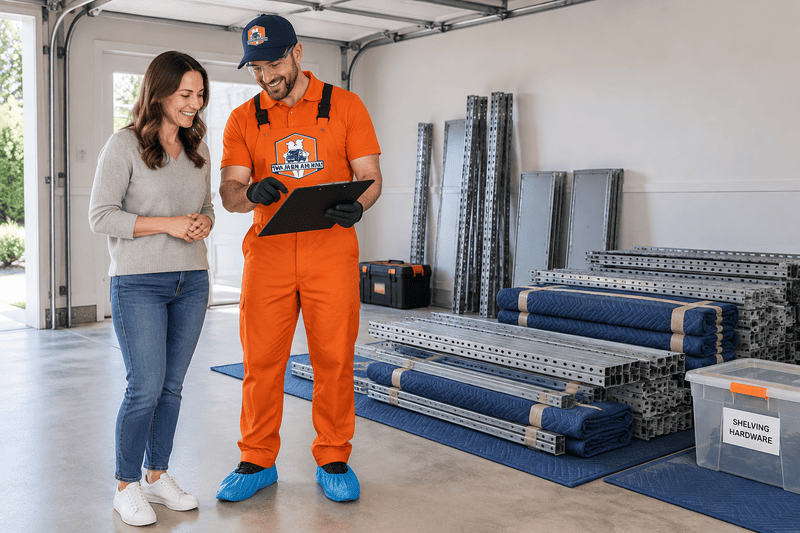
Steel shelving rarely survives transport as one piece. Crews typically unload, disassemble, and wrap each component before loading it onto the truck, which supports safer handling and prevents bent frames or scratched finishes.
Common steel systems crews handle include:
- Boltless rivet shelving units
- Heavy-duty welded wire racks
- Commercial-grade steel shelving tiers
- Freestanding metal storage racks
- Workshop storage racks
These units become difficult to relocate once loaded with tools, parts bins, automotive supplies, or household storage. Many homeowners invest in top-rated garage organization products and shelving without considering how heavy a fully stocked unit becomes. Before transport, movers empty the shelves, separate rivet beams from posts, and bundle hardware in labeled bags. Planning furniture disassembly before a move follows the same logic, and it helps reduce avoidable damage during transit.
Wall-Mounted Storage Requires Controlled Removal
Wall-mounted systems attach directly to studs, masonry, or drywall anchors, so removal requires patience and the right tools. Rushing the job can tear out anchors, crack drywall, or leave holes that complicate painting and remodeling.
Systems that need controlled removal include:
- Adjustable vertical wall standards
- Horizontal steel track rails
- Slatwall organizational panels
- Heavy-duty utility pegboards
- Mounted organization panels
Renters often face extra pressure here, since lease agreements may require walls returned to good condition. Homeowners planning garage storage installation solutions for clutter in a new space also benefit from careful takedown, because intact panels reinstall far more easily. Crews back out fasteners methodically, remove anchors cleanly, and protect surrounding surfaces throughout the process.
Overhead Garage Racks Need Specialized Handling
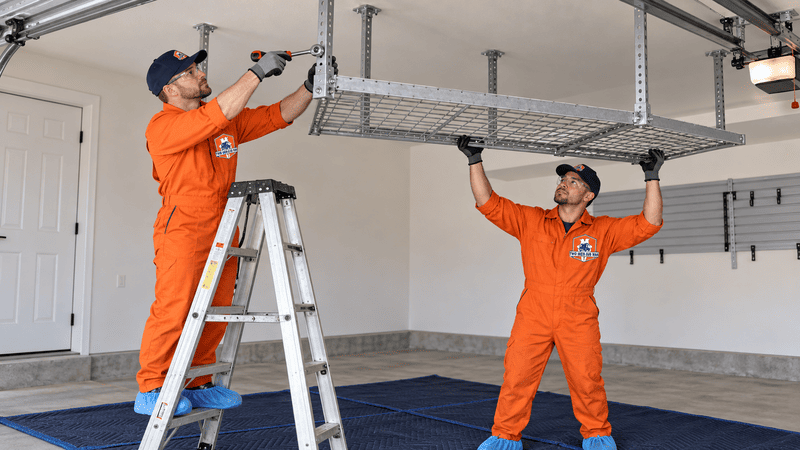
Overhead racks carry weight across ceiling joists, which makes removal a planning exercise rather than a lifting contest. Weight distribution, mounting points, ladder access, and vehicles parked below all shape the safest approach.
Typical overhead systems include suspended steel storage decks, height-adjustable ceiling brackets, multi-bin rail networks, and ceiling-mounted storage platforms. A crew first empties every bin, then supports the deck while releasing fasteners in a controlled sequence.
Property managers preparing units between tenants often pair this work with overhead garage storage rack installation guidance when resetting the space. Because these racks hang above cars and concrete floors, careful sequencing helps protect everything underneath.
Heavy Cabinets and Workbenches Create Moving Challenges
Garage cabinets and workbenches combine weight, bulk, and awkward shapes, so they demand controlled movement and proper loading methods. Dragging them risks floor damage, while tilting them wrong can strain backs or dent vehicles.
Pieces that require special attention include solid steel tool storage chests, rolling workbench stations, locked gear cabinets, and heavy timber-top workstation desks. Before loading, crews secure drawers, lock cabinet doors, and remove detached tops.
Using safer furniture lifting equipment and methods allows these pieces to be moved more efficiently through narrow garage entrances. The same discipline applies to professional packing for heavy specialty equipment, where weight and fragility meet.
Protecting Your Garage and Equipment During Relocation
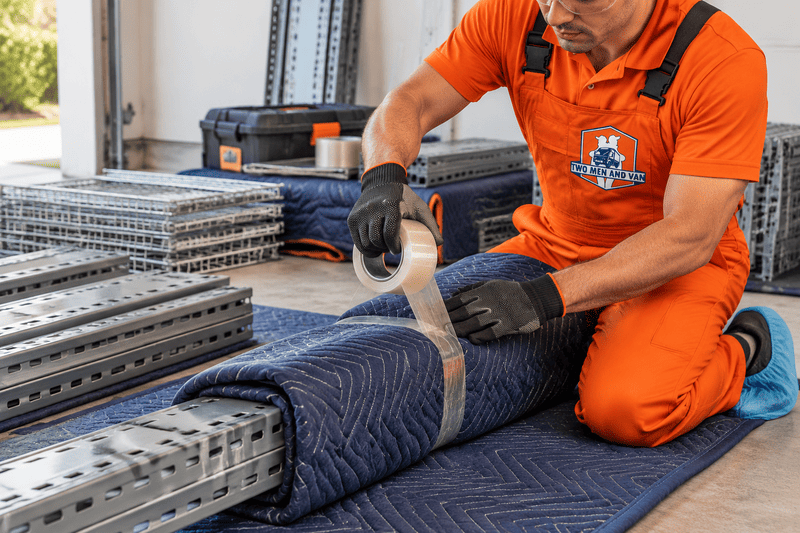
Professional garage shelving relocation means carefully disassembling, protecting, transporting, and repositioning heavy storage systems while considering access paths, equipment weight, mounting methods, and property protection. That definition drives every step of a well-run garage move.
Practical protection methods include:
- Premium moving blankets wrapped around steel frames
- Protective padding along door jambs and wall corners
- Floor runners shielding concrete and epoxy coatings
- Transit tie-downs securing heavy components in the truck
- Hardware bags taped to their matching shelving units
Following safer heavy lifting practices that protect walls also reduces the strain that sends DIY movers to urgent care. For added peace of mind, the FMCSA offers consumer guidance on moving liability protection worth reading before any relocation.
Poor Handling Can Turn Simple Moves Into Expensive Repairs
Most garage moving damage comes from predictable mistakes. Understanding them helps homeowners and property managers decide when professional handling makes sense.
| Common DIY Mistake | Likely Result | Professional Approach |
|---|---|---|
| Dragging loaded steel racks | Cracked concrete, bent frames | Empty, disassemble, carry |
| Prying wall tracks quickly | Torn drywall, lost anchors | Back out fasteners methodically |
| Releasing overhead bolts alone | Falling decks, damaged vehicles | Team support during removal |
| Tilting cabinets through doorways | Scratched walls, jammed frames | Measure, pad, and plan the path |
| Lifting without equipment | Strains and dropped components | Dollies, straps, and team lifts |
Professional Movers Make Garage Relocation More Manageable
Hiring a crew converts a multi-day physical ordeal into a scheduled, organized task. Movers arrive with tools, padding, and a plan, which keeps renovation timelines and moving deadlines on track.
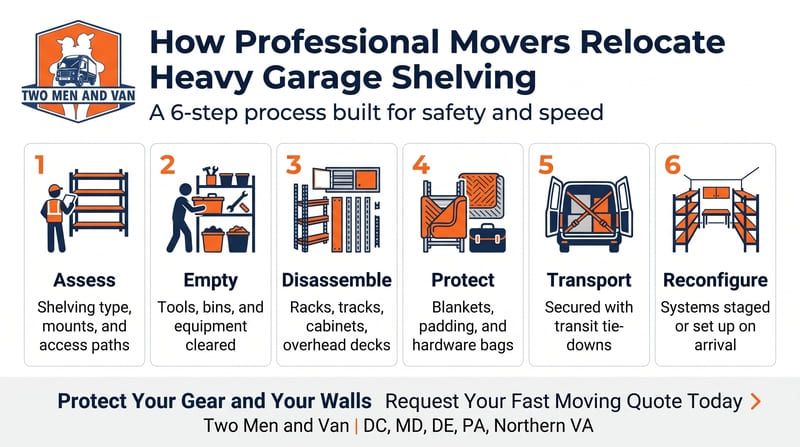
A typical professional garage move follows clear steps:
- Assess shelving types, mounting methods, and access paths
- Empty and organize stored tools and equipment
- Disassemble racks, tracks, cabinets, and overhead systems
- Wrap and protect every component for transit
- Load, secure, and transport to the new location
- Reconfigure or stage systems as needed
Two Men and Van provides complete professional moving services built around this process. Crews also handle garage storage cleanout support before listing a property, plus unpacking and disposal help after moving day ends. Many clients even reuse quality components when upgrading to new garage storage systems and designs at the destination.
Why Experience Matters When Moving Heavy Storage Systems
Experienced crews recognize problems before they become delays. A rusted anchor, a low garage door header, or a sloped driveway each changes the plan, and seasoned movers adapt without improvising dangerously.
Timing matters too. Booking movers early to reduce stress gives you scheduling flexibility, while preparing a realistic moving budget early prevents surprises. If a renovation contractor suddenly needs the garage cleared, last-minute moving assistance when deadlines tighten can help, though availability depends on scheduling and location. Complex storage systems should be assessed before relocation, so share photos and details when you book.
Request Professional Garage Shelving Moving Help Today
Your garage, equipment, walls, and schedule all deserve better than a risky DIY lift. Professional movers handle the disassembly, protection, and heavy transportation so you can focus on the relocation or renovation itself. Related projects often connect naturally, whether that means workplace furniture setup guidance, specialized disposal support for items leaving the garage, or compact recreation setup ideas for the newly cleared space.
Get Your Fast Garage Shelving Moving Quote
Homeowners and property managers across Washington, DC, Maryland, Delaware, Pennsylvania, and Northern Virginia can request a professional moving consultation today and schedule a garage shelving relocation team that treats your property like its own.
Frequently Asked Questions
Can heavy garage shelving be moved without disassembly?
Rarely. Most steel racks and cabinets travel safer when broken down, since fully assembled units flex, scratch surfaces, and often will not fit through doorways.
How do professionals move steel garage racks?
Crews empty the shelves, disassemble frames, wrap components in moving blankets, and secure everything with transit tie-downs during transport.
Can wall-mounted storage systems be relocated?
Yes. Movers remove fasteners and anchors carefully, then patch-ready walls and transport the panels for reinstallation at the new location.
Do movers handle overhead garage storage?
Yes, though these systems should be assessed first. Weight distribution, joist mounting, and access conditions shape the removal plan.
How should garage shelving be prepared before moving?
Empty all bins and tools, group small hardware in labeled bags, and clear a path from the shelving to the garage door.
Can garage cabinets be moved during renovations?
Absolutely. Many homeowners relocate cabinets temporarily so contractors can paint, epoxy floors, or upgrade lighting without obstruction.
Is professional help worth it for heavy storage systems?
For most households, yes. Professional handling helps reduce avoidable damage to walls, floors, vehicles, and the shelving itself while saving considerable time.
When should I schedule garage shelving relocation?
Book as early as possible, ideally before contractors or move deadlines are set, since availability depends on scheduling and location.
Connect With Us
Stay connected with us for moving tips, customer stories, special promotions, and behind-the-scenes content. Follow Two Men and Van on social media to get helpful advice and updates on our services across Maryland, DC, Northern Virginia, Pennsylvania, and Delaware.
- Facebook - Join our community for moving tips and seasonal offers
- Instagram - See real moves, packing hacks, and customer testimonials
- Instagram Washington - Follow our Washington area team for local moving insights
Get inspired, ask questions, and see why thousands of customers trust Two Men and Van for their interstate and local moves.