
Kitchen Packing Guide for Dishes Appliances Glassware and Pantry Items
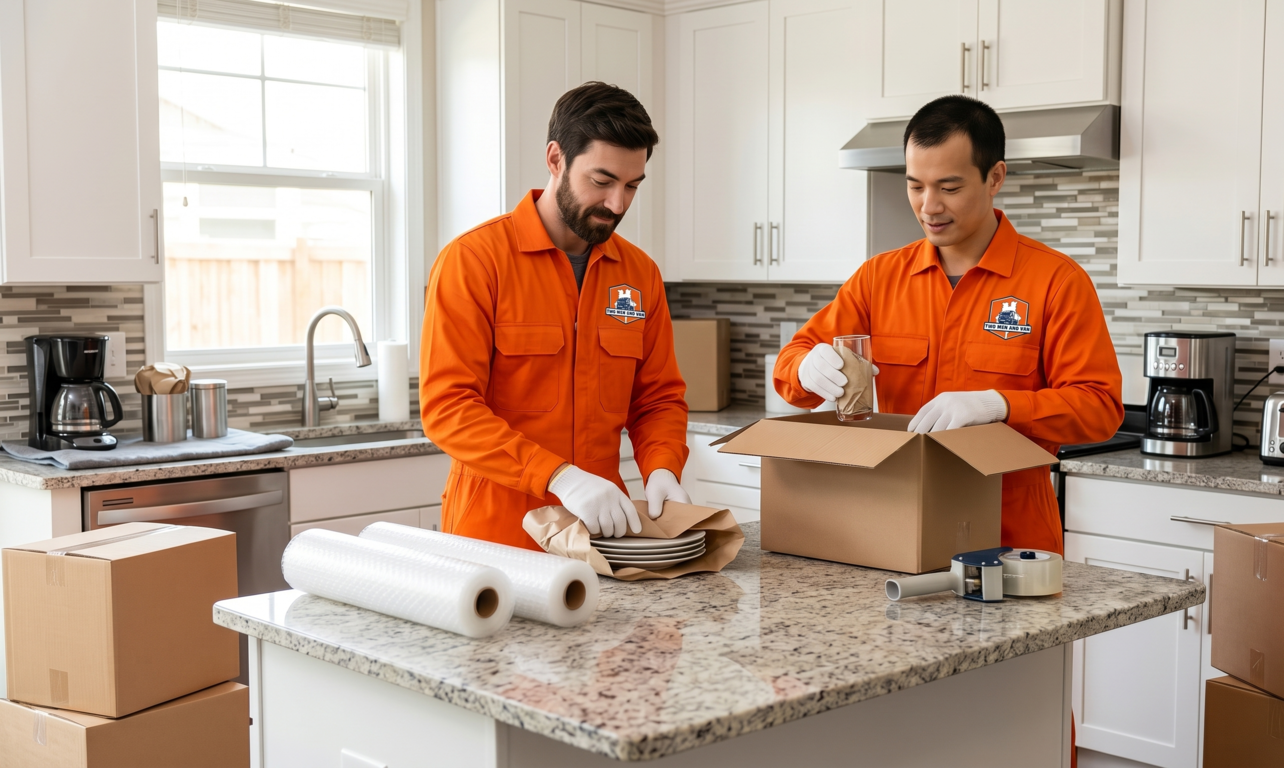
Packing a kitchen properly prevents broken dishes, protects appliances, and keeps pantry items from becoming a mess in transit. It also makes unpacking faster because every box is easier to place and open.
- Wrap fragile items individually
- Cushion glassware and seal box gaps
- Secure cords and loose appliance parts
- Group pantry goods and prevent leaks
- Label boxes by cabinet or zone
The kitchen is usually the last room families use and one of the hardest rooms to pack well. Plates chip, glasses crack, cords tangle, and pantry goods spill when everything gets boxed in a rush. In apartments, condos, and busy family homes, that disorder quickly slows the whole move and creates extra cleanup on the other end.
A smart kitchen packing plan fixes those problems before they start. With the right supplies, a clear labeling system, and help from Two Men and Van when needed, you can protect fragile items, save time, and make unpacking far less stressful.
Why Kitchen Packing Requires Extra Planning During a Move
Kitchen packing needs more planning because one room holds several risk levels at once: fragile glassware, heavy dishes, awkward appliances, and leak-prone food items. When these are packed together without a system, breakage and delays become much more likely.
- Kitchens combine heavy, delicate, and spillable items in a small space
- Last-minute packing often leads to overloaded boxes
- Apartment and condo moves add stairs, elevators, and tight hallways
- Family kitchens usually have more duplicates, gadgets, and pantry overflow
If your move also includes dining furniture, bar stools, or nearby storage pieces, this guide on how to prepare large furniture for movers helps you coordinate the kitchen with the rest of the home.
What Packing Supplies Work Best for Kitchen Items
The best kitchen packing supplies are sturdy small boxes, packing paper, bubble wrap, dividers, strong tape, and clear labels. Choosing the right materials reduces crushing, shifting, and moisture issues, especially when boxes move between trucks, elevators, and storage areas.
| Kitchen item | Best supply | Why it helps |
|---|---|---|
| Dinner plates | Packing paper + dish box | Reduces edge chipping |
| Glassware | Cell dividers + paper | Limits contact and movement |
| Small appliances | Original box or padded carton | Protects corners and controls |
| Pantry jars | Sealable bags + paper wrap | Contains leaks and breakage |
| Sharp tools | Blade covers + taped bundle | Improves handling safety |
When selecting wraps and cartons, it also helps to consider the broader guidance around packaging materials regulations in the United States so your materials are sturdy, appropriate, and safe for household use. For nearby dining sets, hutches, or carts, protective furniture wrapping adds another layer of defense during loading.
How Should Dishes and Glassware Be Packed Safely
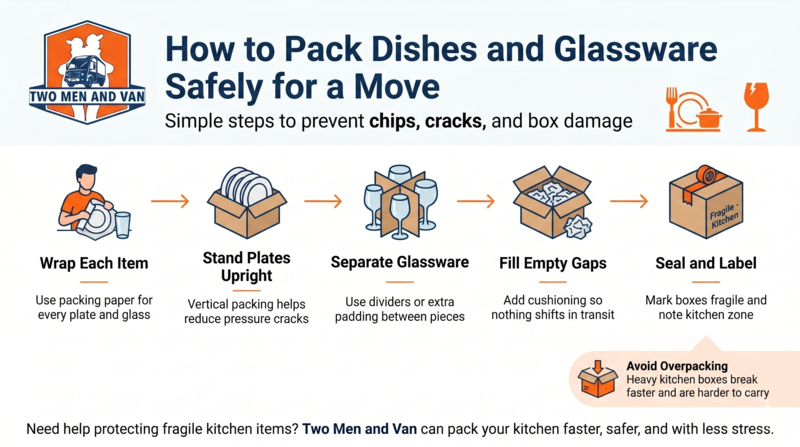
Dishes and glassware should be packed upright, wrapped one by one, and cushioned so nothing shifts inside the box. This method protects rims, stems, and edges, which are the parts most likely to crack during a move.
- Wrap each plate, bowl, mug, and glass separately
- Stand plates vertically instead of stacking them flat
- Fill empty space with crumpled paper, not loose gaps
- Pack heavier dishes on the bottom and lighter glassware on top
- Mark cartons as fragile and note which side stays up
In a last-minute move, people often rush and stack plates flat in large boxes. That usually creates too much weight and pressure. For extra protection in busy households, condos, or long-distance relocations, professional fragile item packing can help safeguard delicate kitchen pieces.
Can Small Kitchen Appliances Be Moved Without Damage
Small kitchen appliances can be moved safely if they are cleaned, dried, secured, and boxed with padding around the base and controls. Coffee makers, mixers, blenders, and air fryers travel best when loose parts are removed and packed separately.
Before boxing
Unplug each item early and give it time to cool or fully defrost if needed. Remove glass components, trays, blades, and detachable bowls.
During transport
Wrap cords neatly, tape moving parts in place, and avoid overpacking the box with extra items. If you want expert help with heavier or more delicate machines, specialized appliance moving support is the safest option.
What Is the Best Way to Pack Pantry and Food Items
The best way to pack pantry items is to sort by category, discard expired goods, and seal anything that can leak, crumble, or shatter. This keeps boxes cleaner, lighter, and easier to unpack by cabinet or food type.
- Group canned goods separately from dry goods and spices
- Use sealable bags for open pasta, flour, rice, and snacks
- Tape lids on oils, sauces, and glass jars
- Avoid mixing food with chemicals or cleaning products
- Keep one essentials box with coffee, paper towels, and simple meal items
This matters even more in family kitchens where half-used containers pile up quickly. If your move is part of a larger household transition, professional moving services for larger household moves can help keep everything coordinated beyond the kitchen alone.
How Labeling Helps During Kitchen Unpacking
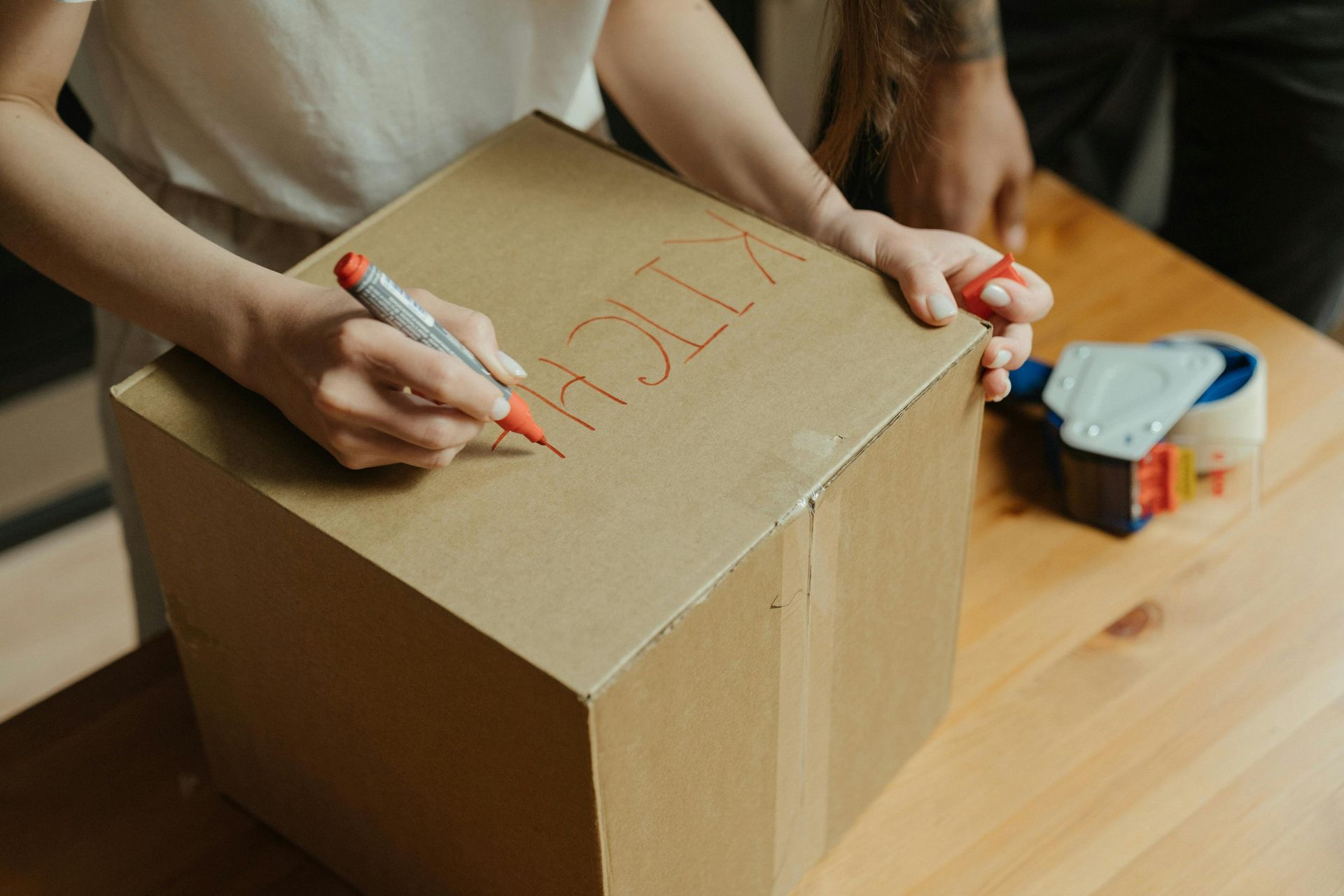
Good labeling turns kitchen unpacking into a simple sequence instead of a box-by-box guessing game. It helps movers place cartons in the right area, protects fragile loads, and lets you find essentials on the first night without opening everything.
- Label by zone, such as plates, pantry, baking, mugs, or appliances
- Add a priority mark for everyday-use boxes
- Note fragile or heavy on more than one side
- Match boxes to cabinet destinations when possible
In apartments and condos, this saves time because boxes go straight to the correct counters or cupboards. It also reduces unnecessary lifting after the move.
What Packing Mistakes Lead to Breakage and Delays
Most kitchen moving problems come from oversized boxes, weak cushioning, rushed labeling, and mixing incompatible items together. These mistakes cause cracked glassware, leaking food, heavier loads, and slower unloading once the truck arrives.
- Packing dishes flat in deep boxes
- Leaving empty space inside cartons
- Forgetting to tape pantry lids
- Boxing sharp tools loosely
- Waiting until the night before moving day
A common example is a family home where canned goods, mugs, and glass jars all end up in one large carton. The box becomes too heavy, harder to carry, and much more likely to fail at the bottom.
How Professional Packing Services Protect Kitchen Items
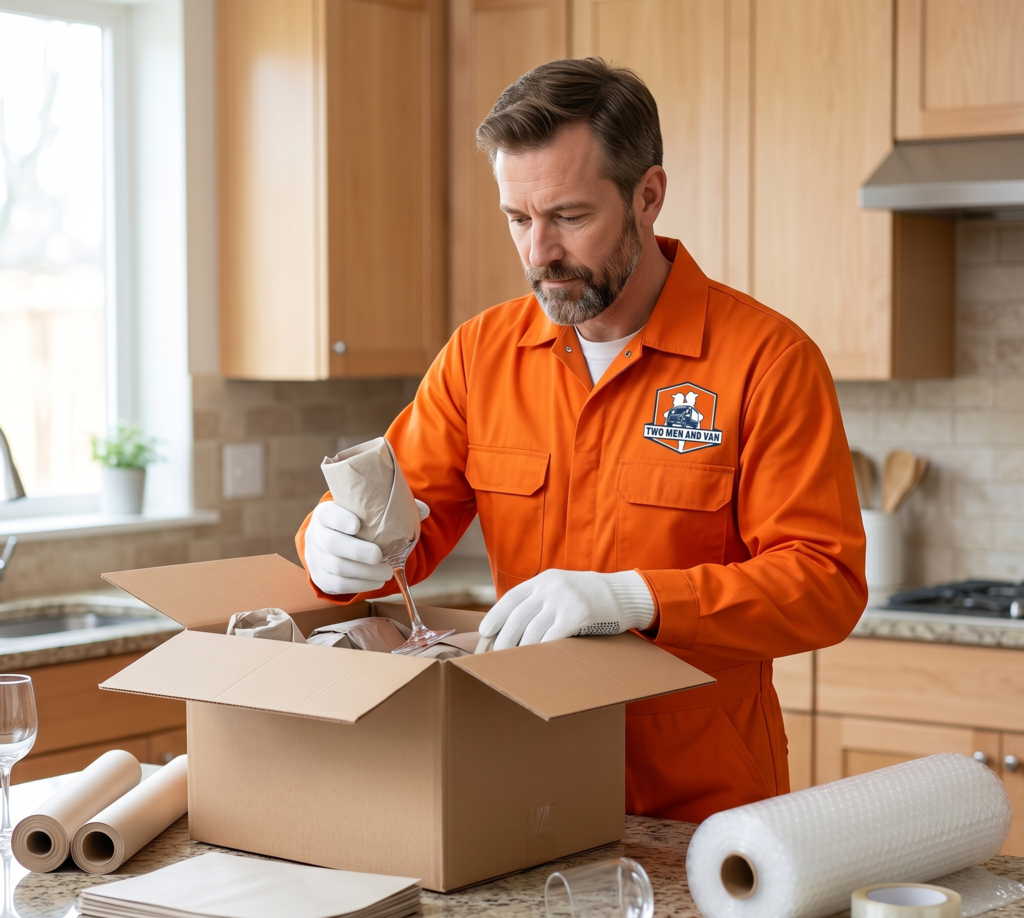
Professional packing services protect kitchen items by combining better materials, proven methods, and faster organization. That means less guesswork for the homeowner and fewer chances for dishes, appliances, and pantry goods to get damaged in transit.
Why it saves time
Professional crews know how to separate fragile, heavy, and spill-prone items quickly. That matters during tight apartment move-outs and last-minute home closings.
Why it reduces risk
Experienced movers spot problems early, such as overloaded boxes, loose appliance parts, or thin glassware that needs extra padding. If you need broader support, Two Men and Van offers a full range of moving and packing services to streamline the entire relocation.
How to Prepare Your Kitchen Before Moving Day
Preparing your kitchen before moving day starts with using up food, decluttering drawers, and separating what needs special handling. A little advance work makes packing faster and helps movers avoid delays when the rest of the home is already in motion.
- Use frozen and refrigerated food in the final week
- Set aside valuables, medicines, and daily-use items
- Clean appliances before packing them
- Empty and sort the junk drawer early
- Build one open-first kitchen essentials box
If your move overlaps with a remodel or built-in removal, plan ahead for kitchen cabinets disassembly before moving day. At the new property, scheduling kitchen cabinets installation early can make unpacking more efficient. For a smoother setup after arrival, it also helps to review kitchen cabinet assembly and installation so the new space is ready when boxes come in.
Get Your Kitchen Packed Safely and Efficiently
A well-packed kitchen saves time, prevents breakage, and makes move-in day feel far more organized. For expert help, contact Two Men and Van and get your kitchen packed with care.
- Also compare disposal and recycling options for unwanted items before moving day
- Review storage cabinet placement tips if your new layout needs better organization
- Think ahead about basketball hoop setup planning if your move includes broader home setup tasks
Frequently Asked Questions About Kitchen Packing Services
How do you pack dishes safely for moving?
Wrap each dish individually with packing paper and place plates vertically in a sturdy dish box. Fill all empty space so items cannot shift during loading and transport.
What packing supplies work best for glassware?
Glassware packs best with packing paper, cell dividers, and small sturdy boxes. Extra cushioning around stems, rims, and corners lowers the chance of cracking.
Can small kitchen appliances be moved in regular boxes?
Yes, but only if the box is strong enough and the appliance is padded well on all sides. Remove loose parts, secure cords, and avoid placing heavy items on top.
What is the best way to organize pantry items for a move?
Sort pantry items by category, throw out expired food, and seal open packages before boxing them. Keep heavy cans in small boxes and pack an essentials food box separately.
Is it worth hiring professional packing services for a kitchen move?
Yes, especially if you have a large family kitchen, delicate glassware, or limited time before moving day. Professional packing usually reduces breakage, speeds up the move, and makes unpacking more organized.
How far in advance should I pack my kitchen before moving?
Start non-essential kitchen packing one to two weeks before the move. Leave daily-use dishes, cookware, and snacks for the final couple of days so the kitchen still functions.
Connect With Us
Stay connected with us for moving tips, customer stories, special promotions, and behind-the-scenes content. Follow Two Men and Van on social media to get helpful advice and updates on our services across Maryland, DC, Northern Virginia, Pennsylvania, and Delaware.
- Facebook - Join our community for moving tips and seasonal offers
- Instagram - See real moves, packing hacks, and customer testimonials
- Instagram Washington - Follow our Washington area team for local moving insights
Get inspired, ask questions, and see why thousands of customers trust Two Men and Van for their interstate and local moves.