Home Gym Equipment Moving Guide for Heavy and Multi Part Setups
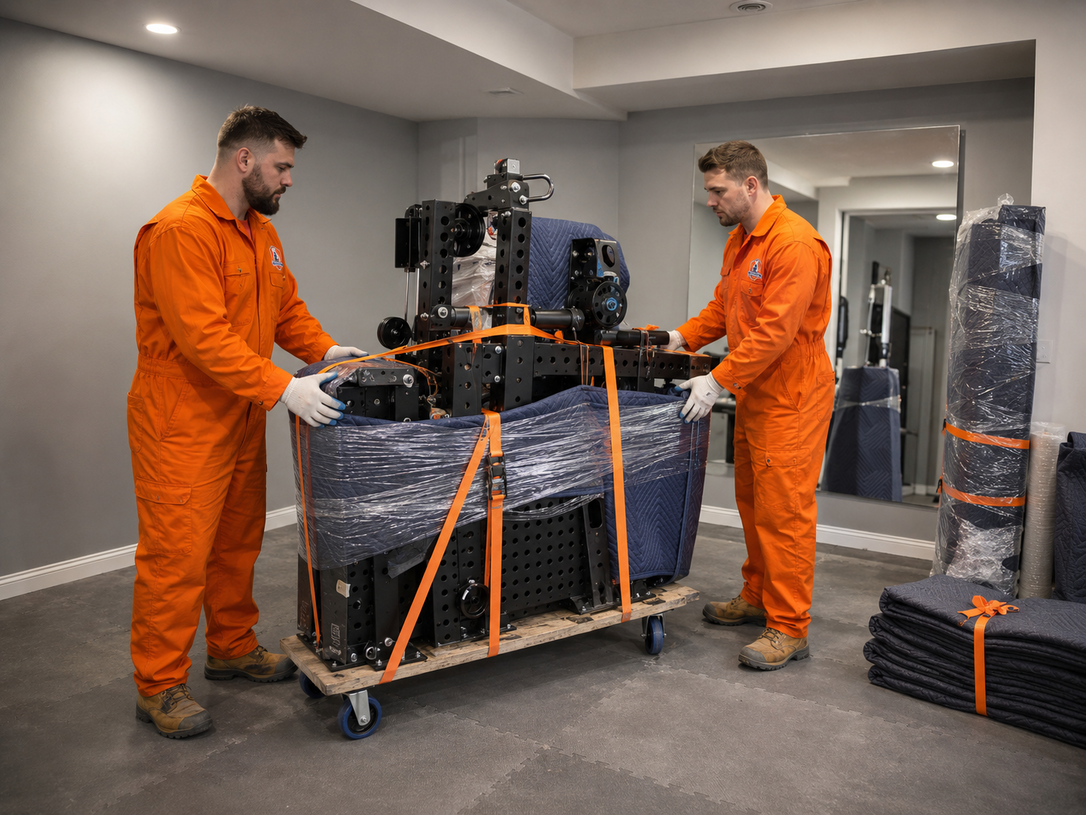
Heavy Home Gym Moving Help for Safer Relocation
Moving heavy and multi-part home gym equipment safely takes planning, careful disassembly, protected moving paths, controlled lifting, organized hardware, prepared transport, and accurate reassembly at the new location. The right approach depends on equipment size, weight, the number of parts, doorway width, stair layout, flooring type, vehicle access, and whether the setup sits in a home, apartment, garage gym, basement gym, or private training space.
- Plan heavy equipment moves before lifting anything to avoid injuries and property damage.
- Disassemble multi-part machines and label every bolt, bracket, pin, and pulley.
- Protect floors, walls, stairs, and doorways with pads, runners, and corner guards.
- Secure heavy fitness gear inside the transport vehicle with straps and blankets.
- Hire professional movers for power racks, treadmills, and weight stack machines.
A home gym move looks simple until someone tries to tilt a 300-pound treadmill through a hallway turn. Steel frames scrape walls, cable systems tangle, weight stacks shift, and bolts go missing on the garage floor. One bad lift can crack a tile, dent a door frame, or knock a treadmill console out of alignment. That is where professional home gym equipment moving makes a difference. Our team handle apartments, basement gyms, garage setups, upper-floor fitness rooms, and multi-machine training spaces with the lifting technique, padding, and disassembly skill these machines actually require.
A Smarter Moving Plan Starts Before the First Machine Is Lifted
Good planning prevents almost every common gym moving mistake. Before moving day, measure each machine, map the exit path, check doorways, and decide what comes apart. Home gym equipment moving planning means reviewing equipment size, weight, disassembly needs, moving path, hardware, flooring, stairs, transport access, and reassembly requirements before relocating fitness machines.
A short walkthrough usually reveals tight turns, low ceilings, or stair landings that need extra protection. Garage gym owners often forget that a power rack will not clear a standard interior door without coming apart. Apartment residents sometimes overlook elevator weight limits. A written checklist keeps the day organized, especially when you also want to move gym equipment safely across multiple floors or properties.
- Measure each machine and every doorway, hallway, and stair landing.
- Confirm elevator access, parking distance, and truck loading space.
- Decide which machines need full disassembly and which can roll on dollies.
- Gather tools, labels, plastic bags, moving blankets, and floor runners.
- Review home gym setup mistakes that often cause damage during transport.
Treadmills, Racks, and Weight Machines Need Different Handling
Not every piece of equipment moves the same way. Treadmills fold and roll, but the deck is heavy and the console is fragile. Power racks come apart into long steel uprights. Cable machines hide pulleys, cables, and weight stacks that must be secured before tilting.
| Equipment Type | Handling Approach | Disassembly Level |
|---|---|---|
| Treadmill | Fold deck, lock pin, protect console | Light |
| Power rack | Remove uprights, crossmembers, J-cups | Full |
| Cable machine | Secure cables, remove weight stack | Heavy |
| Elliptical | Detach arms, pedals, console mast | Moderate |
| Adjustable bench | Fold or remove pads if needed | Minimal |
| Spin bike | Remove pedals and handlebar post | Light |
Treadmills and Cardio Machines
A treadmill moving service usually involves folding the deck, locking the safety pin, padding the console, and using a stair-climbing dolly for upper-floor fitness rooms. Ellipticals and bikes follow a similar path with lighter parts.
Racks, Benches, and Weight Stacks
Power rack relocation almost always requires full disassembly. Weight machine moving demands strapping the stack before tilting so internal pulleys do not slam against the frame.
Multi-Part Fitness Equipment Requires Organized Disassembly
Multi-part fitness equipment moving fails when hardware disappears. Every bolt, washer, pin, and bracket needs a labeled bag tied to its parent machine. Take photos before, during, and after disassembly so reassembly is faster and more accurate.
Cable systems deserve special attention. Mark each cable end, note the routing, and bag the pulleys separately. For garage gym owners with custom setups, a quick reference sheet saves hours later. Many homeowners also book disassembly and reassembly services so the crew handles hardware tracking from start to finish.
- Use zip-top bags labeled by machine name and section.
- Tape hardware bags directly to the largest matching part when safe.
- Photograph cable routing, pulley positions, and bolt orientation.
- Keep tools and torque settings in one container for reassembly.
- Review move and reinstall gym equipment recommendations for cable systems.
Floors, Door Frames, and Stairways Need Protection During the Move
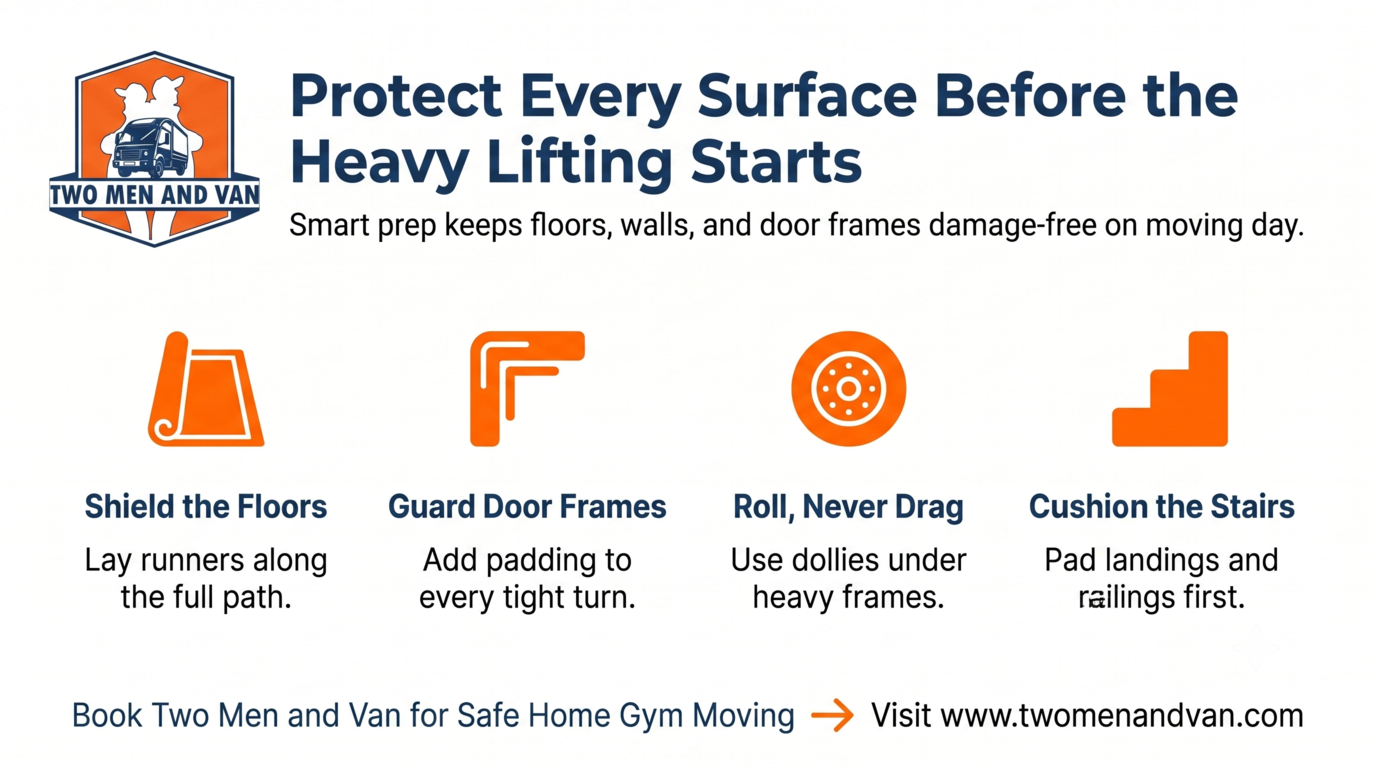
Hardwood floors, finished basements, and painted door frames take the most damage during gym equipment moving. Protective layers should go down before any heavy lifting starts.
Rubber flooring tiles slide easily and can shift under a loaded rack, so secure them or remove them first. Narrow staircases and tight hallway turns are the most common damage points in townhomes and condos.
- Lay floor runners, neoprene mats, or cardboard along the full moving path.
- Install corner guards on door frames and stair railings.
- Use furniture sliders under bench bases and rack uprights.
- Pad walls at every tight hallway turn and landing.
- Roll heavy frames on heavy equipment moving dollies instead of dragging them.
Basement and Garage Gyms Create Unique Moving Challenges
Basement gym equipment moving usually means narrow stairs, low ceilings, and tight turns at the landing. Garage gym moving brings different problems: heavier equipment, rubber tile flooring, and a step-up at the door leading into the house.
Treadmill rooms on upper floors need stair-climbing dollies and at least two trained movers. Rental properties add another layer because landlords expect zero wall scuffs at move-out. For finished basements with drywall corners, extra padding prevents repair bills. Booking the best time to schedule movers also helps avoid weather issues that make garage and driveway loading harder.
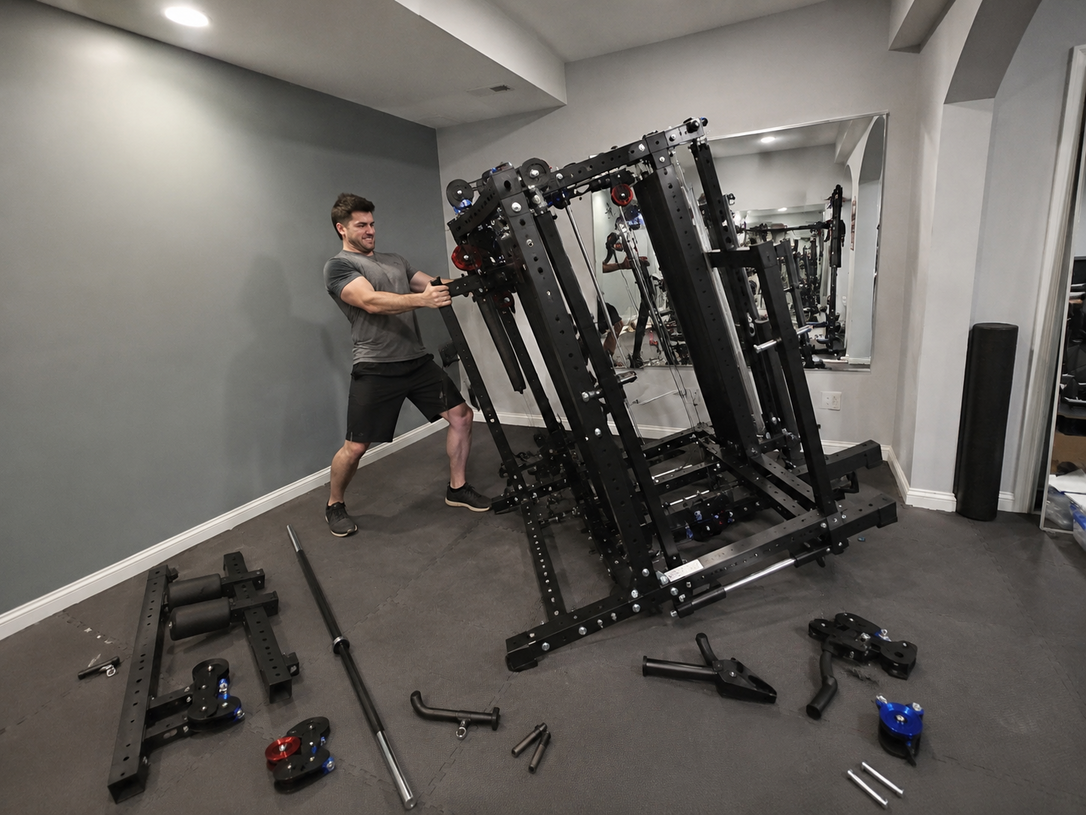
Transport Planning Matters for Heavy Fitness Equipment
Loading order, strap placement, and weight distribution decide whether equipment arrives intact. Heavy pieces go in first and against the cab wall. Padded blankets cover every painted or polished surface. Cable machines and treadmill decks should never sit under stacked items.
Securing Equipment Inside the Truck
Ratchet straps anchor frames to the wall rails. Soft straps protect chrome bars and finished steel. Loose hardware containers ride in the cab so nothing rattles loose during transit.
Vehicle and Route Considerations
A specialty fitness equipment moving crew checks ramp angle, truck height, and parking distance before loading. Long driveways, gravel paths, and apartment loading zones all change the plan. Standards from specialty mover regulation guidance help shape safe loading practices for heavy fitness gear.
Reassembly Should Restore Stability, Alignment, and Safe Use
Reassembly is where many DIY moves fall apart. Bolts get cross-threaded, racks end up uneven, and treadmill belts run off center. Every machine should be rebuilt on a level surface, torqued to the original spec, and tested before regular use.
Cable tension, pulley alignment, and weight stack travel all need a final check. A wobble in a power rack or a misaligned treadmill belt becomes a safety hazard fast. Many homeowners pair the move with home gym equipment installation services so each machine is rebuilt correctly and tested under load.
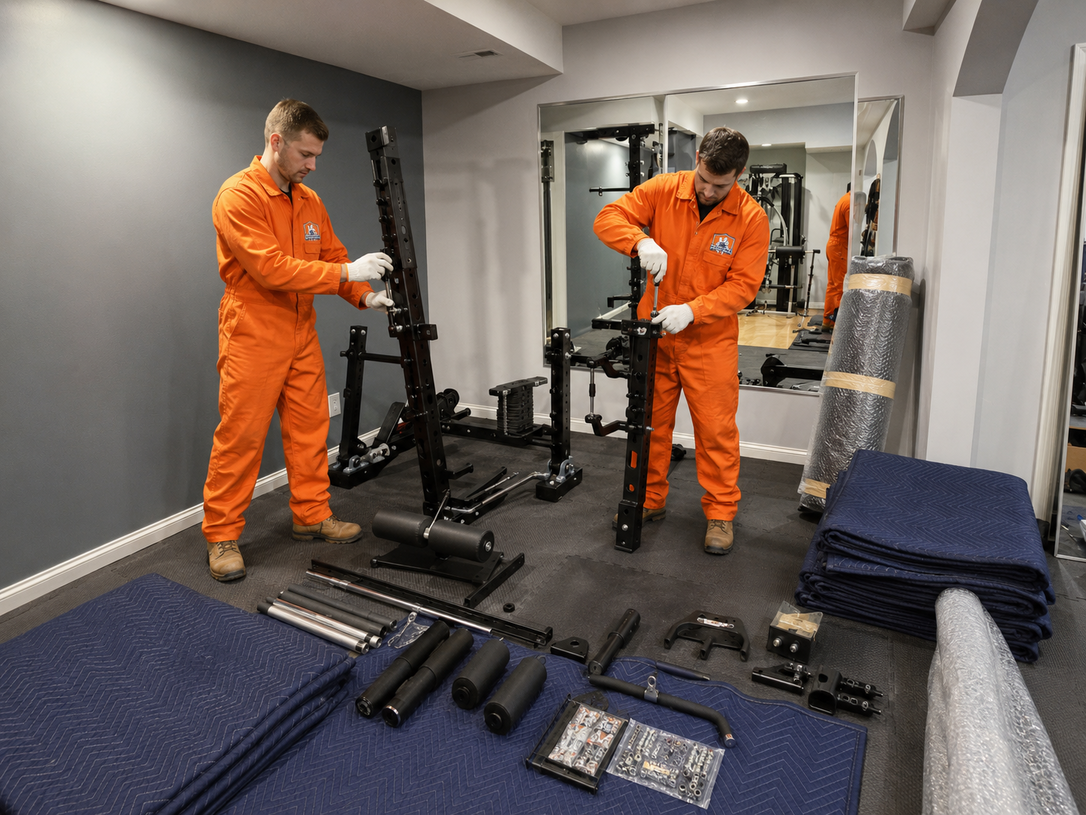
Professional Movers Help Reduce Damage and Moving-Day Stress
Professional gym equipment movers bring lifting straps, stair-climbing dollies, padding, tools, and trained crews. They protect property, organize hardware, and handle disassembly and reassembly without guessing. For multi-machine home gyms, the time and stress savings are significant.
Specialty crews also handle related projects, from specialized equipment relocation support to standard home furniture assembly services on the same visit. That flexibility matters during a full household move.
Schedule Home Gym Equipment Moving With Two Men and Van
Ready to move your treadmill, power rack, or full multi-machine setup without scratched floors and missing bolts? Two Men and Van handles safe lifting, organized disassembly, hardware tracking, floor and wall protection, secure transport, and proper reassembly so your equipment arrives stable and ready to use. Crews also support related projects like recliner repair service near me requests, office furniture installation services for home offices, and even basketball hoops for small driveways.
Call today to schedule home gym moving help with a trusted local crew.
Frequently Asked Questions About Home Gym Equipment Moving
Can home gym equipment be moved without taking it apart?
Some smaller pieces like benches, spin bikes, and folding treadmills can move whole. Larger items such as power racks, cable machines, and weight stacks almost always need disassembly to fit through doorways and travel safely.
What is the hardest home gym equipment to move?
Cable machines and full power racks are usually the most difficult. They combine heavy steel frames, weight stacks, pulleys, and cables that require careful disassembly, padding, and reassembly to keep alignment correct.
How do movers protect floors during gym equipment relocation?
Movers lay runners, neoprene mats, or cardboard along the full path. They also use furniture sliders, dollies, and corner guards to keep finished floors, baseboards, and door frames from getting scratched or dented.
Can a treadmill be moved upstairs or downstairs?
Yes, treadmills can move between floors with a stair-climbing dolly and two trained movers. The deck should be folded and pinned, the console padded, and the path measured ahead of time to avoid tight-turn damage.
Should weight machines be disassembled before moving?
In most cases, yes. Weight stacks should be secured or removed, cables marked, and frames broken down so the machine travels safely and clears tight spaces without bending or twisting.
How do you keep gym equipment hardware organized?
Use labeled zip-top bags for each machine and section. Take photos during disassembly, keep tools in one container, and tape hardware bags to the largest matching part so nothing gets lost during transport.
Can home gym equipment be reassembled after moving?
Yes, when disassembly is documented and hardware is labeled. Reassembly should happen on a level surface, with bolts torqued to spec and every machine tested for stability and alignment before regular use.
When should I hire movers for heavy gym equipment?
Hire professionals when machines weigh over 200 pounds, involve stairs, sit in basements or garages, or include multi-part systems like cable machines and power racks. Trained crews reduce damage risk and protect both the equipment and the property.
Connect With Us
Stay connected with us for moving tips, customer stories, special promotions, and behind-the-scenes content. Follow Two Men and Van on social media to get helpful advice and updates on our services across Maryland, DC, Northern Virginia, Pennsylvania, and Delaware.
- Facebook - Join our community for moving tips and seasonal offers
- Instagram - See real moves, packing hacks, and customer testimonials
- Instagram Washington - Follow our Washington area team for local moving insights
Get inspired, ask questions, and see why thousands of customers trust Two Men and Van for their interstate and local moves.