
Best Time to Move in 2026 to Save Money and Avoid Stress

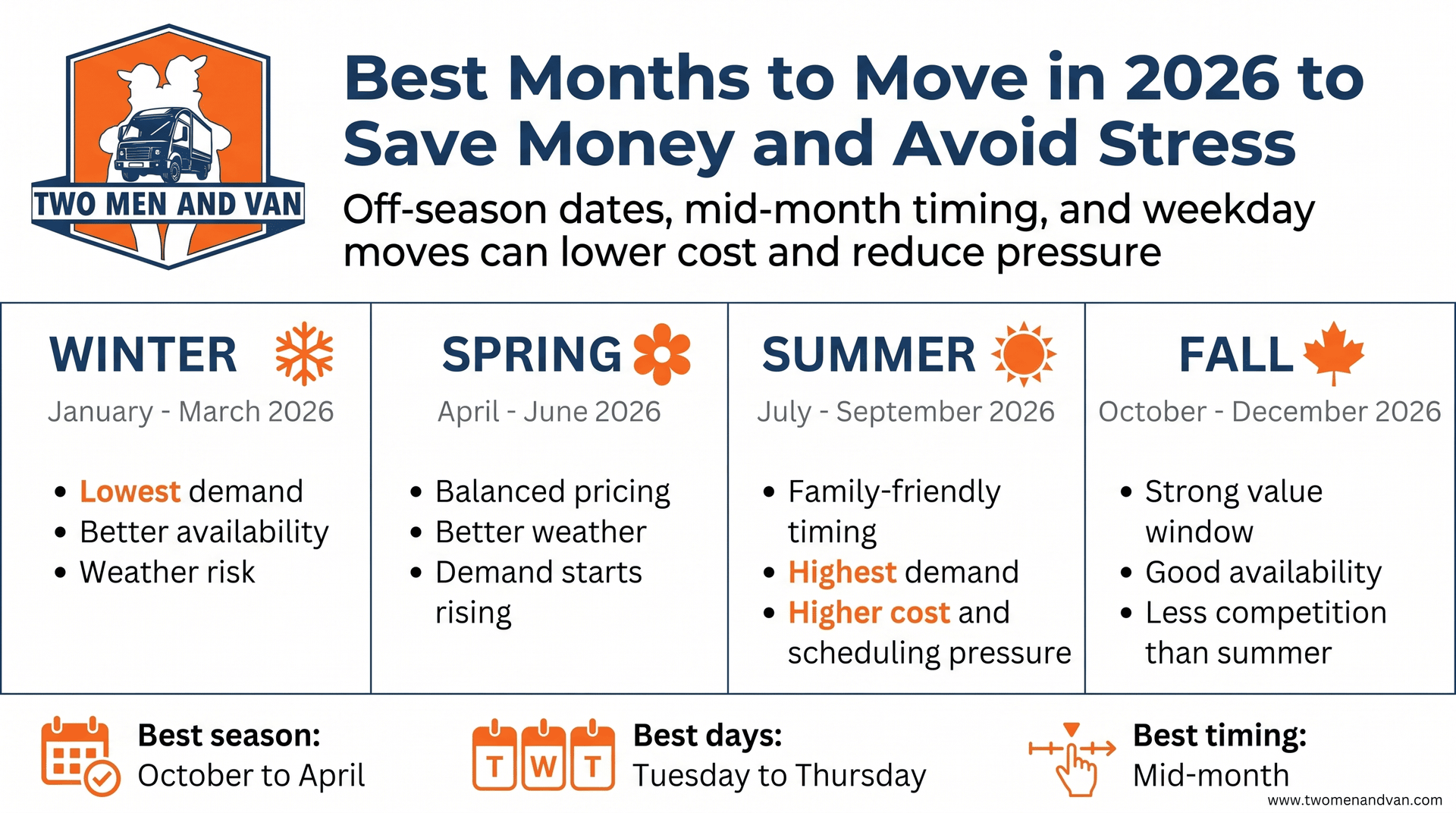
The best time to move in 2026 is usually midweek, mid-month, and during the off-season from October through April if your goal is to save money and reduce stress. Those dates often come with better mover availability, fewer scheduling conflicts, and less pressure than summer weekends or end-of-month rushes. The problem is that many people choose moving dates based only on lease deadlines, school breaks, or closing dates, which can push them into the busiest and most expensive windows. That often leads to higher rates, tighter booking calendars, bad weather backups, and rushed decisions. A smarter plan is to match your move date to demand, building access, family needs, and preparation time, then hire a professional team like Two Men and Van to keep everything on track.
The most affordable and lowest-stress move dates in 2026 will usually be Tuesday through Thursday, during the second or third week of the month, and outside the late spring to early fall rush. If you need the smoothest experience, avoid weekends, month-end dates, and last-minute summer bookings whenever possible.
- October through April is often the best season for lower pricing and more flexibility
- Mid-month dates usually have less competition than first-of-month or last-weekend moves
- Weekdays are often easier to book than Fridays, Saturdays, and Sundays
- Families, renters, and businesses should match the date to school, lease, and access rules
- Booking earlier gives you more control over price, crew availability, and timing
What Times of Year Make Moving More Affordable
The most affordable time to move is usually the off-season, especially from October through April. In 2026, that window should again give homeowners, renters, seniors, landlords, and business owners a better chance at lower pricing, more schedule options, and less competition than the busy summer peak.
Why off-season dates cost less
Moving prices often rise when demand rises. Late spring and summer bring more family moves, lease turnovers, and real estate activity, so calendars fill faster. By contrast, fall, winter, and early spring usually give customers more room to choose dates that fit their budget and schedule.
Off-season moving means choosing a time of year when fewer people are relocating, which usually improves availability and can reduce rate pressure.
| Time of year | Best for | Pros | Cons |
|---|---|---|---|
| January to March | Budget-focused local moves | Lower demand, easier booking, less weekend pressure | Cold weather and storm risk |
| April to early May | Balanced cost and convenience | Better weather, still more flexible than summer | Demand starts rising |
| Late May to September | School-break and family timing | Easier for families with children | Higher prices, tighter availability |
| October to December | Affordable, flexible scheduling | Strong availability, often less competition | Holidays and shorter daylight |
Who benefits most
Families may still prefer summer for school reasons, but retirees, renters with flexible lease timing, landlords planning turnovers, and businesses coordinating office transitions often benefit most from off-peak dates. That is where Two Men and Van can add real value by matching the move plan to your timing priorities instead of forcing a rushed date.
How Do Moving Dates Affect Price and Availability
The exact moving date can change both price and availability more than many people expect. Mid-month and midweek dates are often easier to secure, while weekends, month-end dates, and peak-season requests usually cost more and leave fewer crew and truck options.
High-demand dates create pricing pressure
The busiest dates are often the last few days of the month, the first few days of the next month, and summer weekends. That is especially true for renters, because lease cycles tend to cluster around those windows. If your date is flexible by even a few days, you may open up better pricing and a smoother experience.
- Second and third week dates are often less competitive
- Tuesday, Wednesday, and Thursday usually offer more flexibility
- Month-end dates tend to book faster
- Same-week moves can limit your choices
- Peak-season weekends often carry the most pressure
A practical look at how seasonality, day choice, access, labor, and urgency affect pricing appears in Two Men and Van’s mover cost guide for Baltimore.
Why leases and turnover schedules matter
Renters, landlords, and property managers often face compressed windows because apartments must be vacated, cleaned, and turned over fast. That is why coordinated planning matters for building access, loading zones, and setup timing. Property teams dealing with tight rental schedules may also benefit from apartment turnover assembly services for property managers.
It also helps to know that broad consumer advice points to the second and fourth weeks of the month as more cost-effective than the last weekend, when lease-driven competition spikes, as noted by House Beautiful’s overview of the best time of month to move.
Which Days of the Week Are Best for Lower Moving Costs
The best days of the week for lower moving costs are usually Tuesday, Wednesday, and Thursday. Those midweek dates often face less demand than Fridays and weekends, so they can be easier to book and less hectic for homes, apartments, offices, and mixed-use properties.
Why weekdays usually work better
Weekend moves are popular because they seem convenient. However, that convenience often comes with higher demand, tighter arrival windows, and more competition for elevator reservations, loading docks, and curb space. Midweek dates often create a calmer environment and reduce bottlenecks.
A better fit for renters and smaller moves
Smaller apartment moves can benefit the most from weekday flexibility because buildings often manage traffic, service elevators, and parking more easily outside weekend rushes. Renters looking for efficient timing can borrow ideas from these small apartment moving tips for renters.
For homeowners and families, a weekday move may also allow cleaner handoffs between closing, key pickup, and utility activation. If you work from home or manage a business, spreading the move across midweek can also reduce personal weekend burnout.
Can Peak Season Moves Create More Stress and Delays
Peak season moves usually create more stress and a higher chance of delays because more people compete for the same trucks, crews, elevators, loading spaces, and preferred time slots. Summer demand can still be workable, but it requires earlier booking and tighter coordination to avoid preventable problems.
Where stress builds fastest
Peak-season pressure often shows up in small but costly ways. A late truck arrival, a missed elevator window, or a last-minute parking issue can throw off the entire day. Families may also feel extra pressure when trying to move between camps, vacations, and school preparation.
- Preferred morning slots disappear faster
- Building access conflicts happen more often
- Rain or heat can slow loading and unloading
- Last-minute changes become harder to absorb
- Claims and damage concerns grow when moves feel rushed
When a move is organized well, paperwork and recovery are easier too. Federal guidance explains how written documentation, deadlines, and clear claim details matter if household goods are lost or damaged, which is one more reason to avoid rushed planning during the busiest windows according to the Surface Transportation Board’s household goods claims guidance.

How Far Ahead Should You Book a Move in 2026
Most people should book a move in 2026 at least two to four weeks ahead for local jobs and four to six weeks ahead for peak-season or long-distance moves. If your date falls in summer, at month-end, or around a major property turnover, earlier is even better.
Recommended booking windows
A simple rule works for most moves:
- Small local apartment move: 2 to 4 weeks
- Standard home move: 3 to 5 weeks
- Summer move: 4 to 6 weeks
- Interstate relocation: 4 to 8 weeks
- Office or multi-stop move: as early as possible
Longer-distance scheduling usually needs more lead time because routing, labor, packing, and timing all become more complex. That is why Two Men and Van’s interstate movers guide recommends planning early, especially during high-demand periods.
Why early booking saves stress
Early booking does more than protect a date. It gives you time to declutter, reserve elevators, transfer utilities, arrange child care, and plan around closings or lease deadlines. It also gives your mover a clearer path to build the right crew and truck plan.
What Timing Mistakes Make Moving More Expensive
The biggest timing mistakes are waiting too long to book, choosing a high-demand date without a backup plan, and underestimating the prep time needed for packing, access, and large-item handling. Those mistakes often create extra labor, premium pricing, and avoidable day-of stress.
Common mistakes that raise costs
- Booking only a few days ahead during a busy period
- Choosing Saturday or month-end without checking alternatives
- Forgetting elevator, dock, or parking reservations
- Leaving packing unfinished for moving day
- Not planning disassembly for bulky furniture or equipment
Heavy or awkward items can slow a move dramatically when the schedule is already tight. If you have safes, sectionals, appliances, gym equipment, or oversized furniture, it is worth reading about professional movers for heavy items before locking in your date.
Large furniture can also create delays if it is not broken down in advance, so planning around a furniture disassembly for moving guide can make the moving window far more efficient.
Protection matters too. Consumers should review valuation choices before moving day, because coverage terms and claim outcomes are easier to manage when decisions are made ahead of time rather than in a rush, as explained in the FMCSA’s guide to liability protection for household goods moves.
How Weather and School Schedules Affect Moving Plans
Weather and school calendars can be just as important as price when choosing the best time to move. Families may accept a higher-cost summer date for academic continuity, while retirees, landlords, and business owners often gain more by choosing a flexible off-peak week with milder logistical pressure.
Balancing weather risk
Winter can be cheaper, but snow, ice, and shorter daylight can slow loading and travel. Summer offers longer days, yet heat, storms, and traffic can add fatigue. In Maryland, Washington DC, Delaware, Pennsylvania, and Northern Virginia, the best compromise is often early spring or mid-fall when weather is more predictable.
Planning around children, leases, and operations
Families may prefer late spring or summer to avoid changing schools midyear. By contrast, landlords and property managers may target dates that reduce vacancy gaps, while business owners often choose quieter weekdays to protect operations. The right answer is not always the cheapest date. It is the date that reduces total disruption.
Smart Ways to Choose a Moving Date With Less Stress
The smartest moving date is the one that balances cost, availability, weather, access, and your personal schedule. A lower quote is helpful, but a slightly different date can be the better value if it reduces overtime, delays, and post-move exhaustion.
Use a simple decision filter
Ask these questions before locking in the date:
- Can you move midweek instead of on a weekend
- Can you avoid the last few days of the month
- Do you need school-break timing or building approval
- Are large items packed, protected, and ready
- Do you want packing, delivery, or setup help included
Choosing one company that can handle more than just loading can also simplify the schedule. Two Men and Van offers a broad range of moving and support services, which helps customers coordinate packing, relocation, disassembly, delivery, and other logistics under one plan.
If your goal is to settle in faster after move-in day, planning ahead for smart furniture setup with expert installation can reduce the stress that often continues after the truck leaves.
Plan Your 2026 Move Around Cost and Convenience
The best 2026 move plan is the one you make early and align with your real priorities: lower cost, better availability, smoother scheduling, and less stress. Whether you are moving a house in Baltimore, a condo in Bethesda, an apartment in Arlington, a family home in Rockville, a rental in Wilmington, an office in Alexandria, or a larger relocation tied to Harrisburg, Two Men and Van can help you choose a date that works for your budget and timeline.
For homeowners, renters, families, seniors, landlords, property managers, and business owners across Maryland, Washington DC, Delaware, Pennsylvania, and Northern Virginia, professional planning makes a major difference. It also helps when your transition includes services beyond the truck itself, such as senior living furniture setup support, office furniture setup with minimal disruption in the DMV, or even preparation around fitness equipment installation safety. When you are ready to secure the right date, contact Two Men and Van and book your move with a team focused on affordability, timing, and a smoother experience from start to finish.
Frequently Asked Questions About the Best Time to Move in 2026
What month is cheapest to move in 2026?
January and February are often the cheapest months to move because demand is usually lower after the holiday season. However, weather risk can offset some of the savings, so flexibility matters.
Are weekdays cheaper than weekends for moving?
Yes, weekdays are usually cheaper than weekends because fewer people want to move on Tuesday, Wednesday, or Thursday. That lower demand can also improve crew availability and scheduling flexibility.
How far ahead should movers be booked in 2026?
Most local moves should be booked at least two to four weeks ahead, while summer and long-distance moves often need four to six weeks or more. Earlier booking usually gives you better date options and less stress.
Are summer moves more expensive?
Yes, summer moves are usually more expensive because families, renters, and homebuyers all compete for dates at the same time. That pressure is even stronger on weekends and at the end of the month.
What time of month is best for lower moving costs?
The middle of the month is often better for lower moving costs because it avoids the lease turnover rush at the beginning and end of the month. Second and third week dates are usually easier to secure.
Should families with children avoid certain moving dates?
Families should avoid dates that create school disruption, tight packing windows, or back-to-back travel stress. If a summer move is necessary, booking early and avoiding month-end weekends can make the process much smoother.
How should weather affect a moving date?
Weather should shape both the date and the backup plan. Winter may lower costs, but snow and ice can slow the move, while summer heat and storms can increase fatigue and delays.
When are professional movers better than a DIY move
Professional movers are the better choice when the move includes stairs, tight timelines, heavy furniture, fragile items, building rules, or a larger home or office. They are also a smart option when you want lower physical strain and a more predictable schedule.
Connect With Us
Stay connected with us for moving tips, customer stories, special promotions, and behind-the-scenes content. Follow Two Men and Van on social media to get helpful advice and updates on our services across Maryland, DC, Northern Virginia, Pennsylvania, and Delaware.
- Facebook - Join our community for moving tips and seasonal offers
- Instagram - See real moves, packing hacks, and customer testimonials
- Instagram Washington - Follow our Washington area team for local moving insights
Get inspired, ask questions, and see why thousands of customers trust Two Men and Van for their interstate and local moves.