
How Long Does a Move Take? Real Moving Timelines by Home Size and Distance

Most local moves take anywhere from 3 to 10 hours, but the real timeline depends on more than miles. Home size, how well you are packed, stair flights, elevator rules, parking access, and bulky items often make a bigger difference than distance alone.
- A studio or small one-bedroom move may finish in 3 to 5 hours if everything is boxed and access is easy.
- A two to three-bedroom move often takes 5 to 8 hours, especially if loading, travel, and unloading all happen the same day.
- Apartments usually take longer when elevators, loading docks, narrow halls, or strict move windows are involved.
- Packing delays are one of the most common reasons a move runs behind.
- Stairs, long carries, and oversized furniture can easily add 30 minutes to 2 hours.
Most people underestimate moving time because they picture the drive, not the work around it. In reality, the clock keeps running while boxes are still being taped, parking is being sorted out, elevators are being shared, and furniture is being angled through tight stairwells. One slow point can ripple through the rest of the day.
That is why a realistic moving timeline matters. When you plan for loading conditions, packing readiness, heavy items, and building rules ahead of time, the whole move feels calmer. You avoid missed elevator slots, late truck arrivals, overtime surprises, and the stress of watching a simple move turn into an all-day scramble.
How Much Time Should You Expect for a Local Move
A local move usually takes 3 to 8 hours for smaller homes and apartments, while larger homes often need 8 to 10 hours or more. The biggest variables are volume, packing readiness, walking distance to the truck, and whether the crew can move continuously without waiting on elevators, keys, or access issues.
A local move usually means a same-day relocation within the same metro area, often billed by the hour rather than by shipment weight.
What that looks like in real life
If you are moving from a walk-up apartment in Baltimore to another unit 20 minutes away, the drive may be short, but stairs and parking can stretch the job. By contrast, a ground-level townhouse move in Rockville with a driveway and boxed belongings may go faster even if the new home is slightly farther away.
Most people should plan around these common ranges:
- Studio or small one-bedroom: about 3 to 5 hours
- Two-bedroom apartment or townhouse: about 5 to 7 hours
- Three-bedroom family home: about 6 to 9 hours
- Larger suburban home: about 8 to 10+ hours
For households comparing labor time to price, hourly billing is a big part of the equation, which is why understanding how moving hours affect cost matters just as much as mileage when reviewing moving costs in Baltimore. If you want broader help beyond loading and transport, Two Men and Van also offers moving, packing, disassembly, delivery, and relocation services.
Does Home Size Change the Moving Timeline
Home size changes the moving timeline because more rooms usually mean more furniture, more boxes, and more decision points. Even when two homes are the same square footage, the one with den furniture, patio pieces, kids’ gear, and storage overflow will almost always take longer.
Volume matters more than the listing description
A neat one-bedroom apartment with minimal furniture may move quickly. A two-bedroom condo with a sectional, standing desks, shelves, and packed closets can take much longer than expected. Families often lose time on toys, garage items, laundry areas, and last-minute sorting.
Heavy or oversized items also change the pace. Safes, treadmills, large dressers, refrigerators, and solid-wood bed frames require more protection, better angles, and sometimes partial disassembly. That is one reason many households rely on professional movers for heavy items instead of trying to force a rushed carry.
Typical size-related slowdowns
- More drawers and loose contents to secure
- More furniture that needs wrapping
- More room-to-room decision making at delivery
- More specialty pieces such as exercise equipment or appliances
Home gyms are a classic example. Treadmills, rowers, and power racks are awkward, heavy, and time-consuming, which is why moving gym equipment to a new home often needs extra time and planning.
When Does Distance Add More Time to a Move
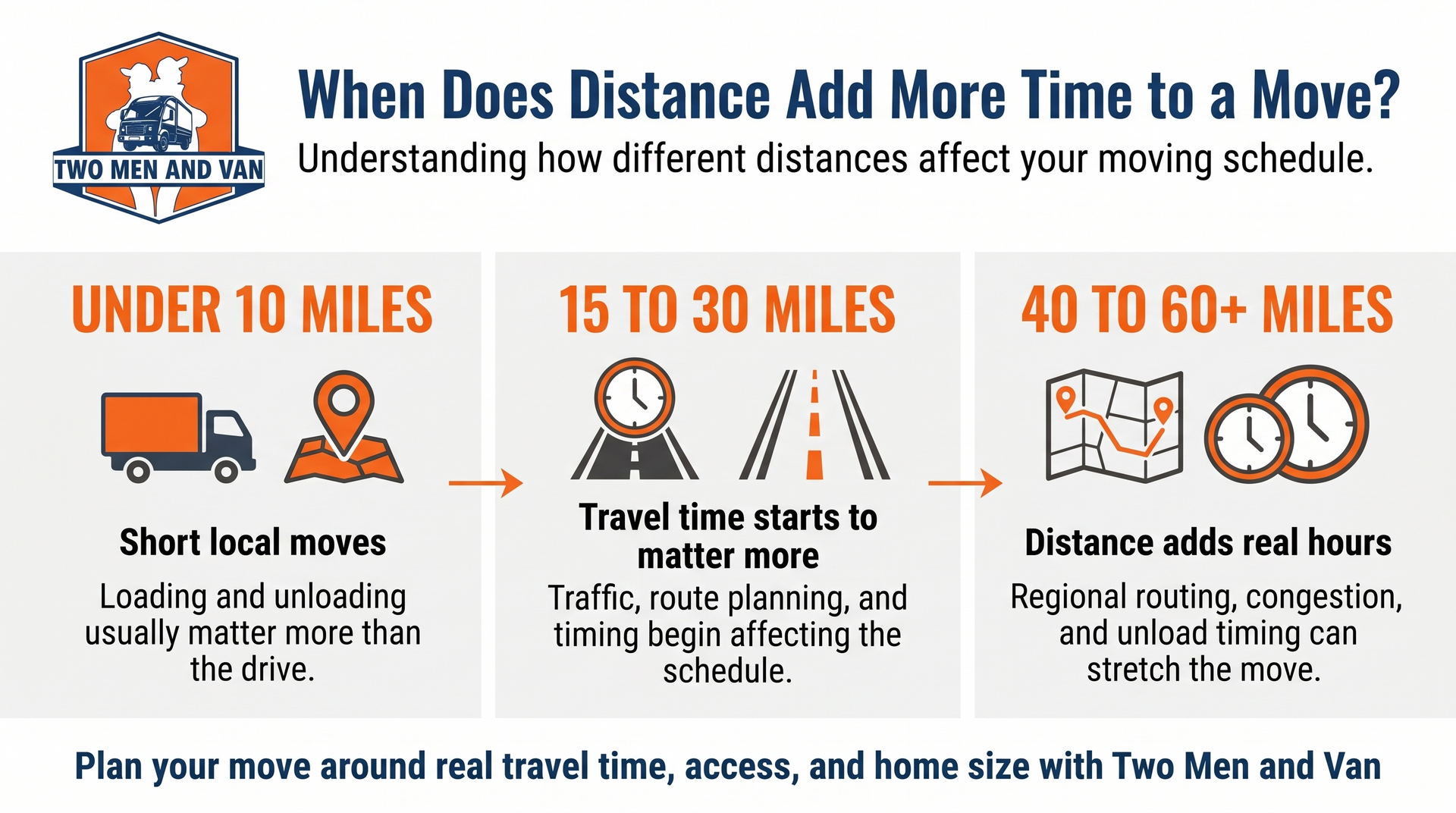
Distance adds more time once travel is long enough to break the flow of a same-day local move, especially when traffic, route restrictions, and multiple stops come into play. For short local moves, loading and unloading usually take longer than the drive. For regional moves, transit time starts to matter much more.
Short drive versus longer route
If you are moving within Bethesda or Alexandria, a 10 to 20 minute drive often has less impact than stairs or elevator wait time. But if you are moving from Washington DC to Wilmington, or from Arlington to Harrisburg, the travel window starts affecting crew hours, arrival timing, and unload planning.
A practical rule is simple:
- Under 10 miles: labor and access usually dominate the timeline
- Around 15 to 30 miles: traffic and route planning start to matter more
- Around 40 to 60+ miles: travel can add meaningful hours, especially on busy corridors
Once a move shifts from local timing to longer-haul planning, the process needs a different approach. That is where an interstate movers guide becomes useful, especially for customers planning beyond a standard local job.
Why Do Apartment Moves Often Take Longer Than Expected
Apartment moves often take longer because crews deal with shared buildings, elevators, loading docks, parking limitations, and narrow interior paths. Even a small apartment can run slower than a larger house if movers spend part of the day waiting, walking long distances, or working around building restrictions.
The building can be the bottleneck
In many apartment relocations, the hardest part is not the amount of stuff. It is the path between the unit and the truck. A single reserved elevator helps. No elevator, limited loading time, or a freight elevator shared with other residents can slow everything down.
Common apartment delays include:
- Elevator reservation windows that start late or end early
- Long hallways from the unit to the loading area
- Limited truck parking near the entrance
- Move-in rules for weekday hours only
- Security desk check-ins or certificate requirements
That is why a studio in downtown DC can take as long as a two-bedroom townhouse in suburban Maryland. Access conditions often outweigh square footage.
Could Packing Delays Throw Off the Entire Schedule
Packing delays can throw off the entire schedule because movers work fastest when they arrive to a home that is fully boxed, labeled, and ready. If the crew has to wait while closets are sorted, cables are untangled, or kitchen items are still loose, the timeline slips almost immediately.
Why unfinished packing costs time
Packing problems do not stay in one room. They slow loading, reduce truck organization, and create confusion at unloading. Electronics are a common culprit because cords, screens, and accessories take longer than people expect. A little preparation goes a long way, especially when following practical steps for how to safely move electronics and computer equipment.
Preparation also matters for liability. Federal guidance on liability protection notes that customer-packed boxes can complicate damage claims, which is one more reason to pack carefully and label clearly before move day.
Packing habits that keep the move on track
- Finish boxing before the crew arrives
- Label boxes by room, not just by contents
- Bag hardware and remote controls separately
- Keep essentials and valuables with you
- Empty dressers, desks, and storage benches if they are heavy
Typical Moving Timelines for Studios Homes and Larger Properties
For most local moves, real timelines fall into clear ranges based on home size, access, and readiness. These estimates assume normal traffic, a same-day move, and a home that is mostly packed before the truck arrives.
| Property type | Typical move time | What often adds time |
|---|---|---|
| Studio apartment | 3 to 4 hours | Walk-up stairs, no parking, late packing |
| 1-bedroom apartment | 3 to 5 hours | Elevator wait time, long hallways, fragile items |
| 2-bedroom apartment or condo | 5 to 7 hours | Loading dock delays, extra furniture, tight entry paths |
| 2 to 3-bedroom townhouse | 6 to 8 hours | Multiple floors, bed disassembly, narrow stairs |
| 3-bedroom suburban home | 6 to 9 hours | Garage items, kids’ rooms, longer carry to truck |
| 4-bedroom family home or larger | 8 to 10+ hours | High volume, specialty items, more room setup decisions |
How to read these estimates
These are working ranges, not guarantees. A small home that is fully packed with easy parking may finish early. A larger house with a driveway, wide doors, and organized staging may also move faster than expected.
By contrast, furniture prep can either save time or waste it. If beds, large desks, or wall units need to come apart, reviewing a solid furniture disassembly for moving guide ahead of time can shorten both loading and unloading.
Where Loading Access and Stairs Slow Things Down
Loading access and stairs slow things down because they turn every box and every piece of furniture into a longer carry. A short move with poor access can take longer than a farther move with a clean driveway, ground-floor entry, and direct truck placement.
Access issues add time in small increments
One extra flight of stairs may not sound serious. But repeated over dozens of boxes and several large pieces, it adds up quickly. The same goes for side-door access, alleys, basement exits, and buildings with long internal walks.
Large-item safety matters here too. OSHA notes that lifting risk depends on more than weight alone, including twisting, frequency, carry distance, and how far an item is held from the body. That is why safe lifting guidance is so relevant when a move includes awkward, bulky pieces.
Access problems that regularly add 30 to 120 minutes
- Two or more flights of stairs
- Long walk from front door to legal parking
- Elevator-only loading with a reservation window
- Narrow turns that require furniture disassembly
- Steep driveways, basement exits, or rear alley loading
Good prep helps. If you measure pathways and remove detachable parts in advance, movers can work with fewer interruptions. That is exactly why guidance on how to prepare large furniture for movers is so useful. Specialty items such as treadmills and similar equipment can need even more care, and professional moving services for equipment-heavy pieces often prevent long delays on move day.
How to Plan a Moving Day Without Running Behind
The best way to avoid running behind is to build your moving day around real constraints, not best-case assumptions. Start with the size of your home, then add time for packing checks, building access, travel, heavy items, and a cushion for the unexpected.
A simple planning framework
Book earlier than you think you need to, especially for weekends, summer, and end-of-month dates. Midweek and mid-month moves are often easier to schedule and less chaotic, which lines up with practical advice on the best time to move in 2026.
Then work through this checklist:
- Confirm truck parking and building access a few days ahead
- Finish boxing at least the night before
- Disassemble large furniture when possible
- Set aside keys, documents, chargers, medications, and essentials
- Keep children and pets out of high-traffic areas
- Leave a 30 to 60 minute buffer in your day
If you are moving a townhouse in Arlington, an apartment in Baltimore, or a family home in Bethesda, realistic planning is what keeps a normal move from becoming a rushed one.
Set a Moving Timeline That Fits Your Home and Distance
A smoother move starts with a realistic schedule, not guesswork. Two Men and Van helps customers plan around apartments, homes, townhouses, office-to-home moves, family relocations, and both local and longer-distance routes across Maryland, Washington DC, Delaware, Pennsylvania, and Northern Virginia, including Baltimore, Rockville, Bethesda, Arlington, Alexandria, Wilmington, and Harrisburg.
If you want fewer delays, safer handling, better loading flow, and less moving-day stress, the smart next step is to contact Two Men and Van. They can help you plan the right crew, timing, and prep for your home size and access conditions. If your move also includes post-move setup issues, common sofa assembly mistakes that cause wobbling and early wear, smarter conference room furniture installation for modern office spaces, or urgent backyard needs such as emergency trampoline repair services, coordinating those details early can make the whole transition easier.
Frequently Asked Questions About Moving Timelines
How long does a studio apartment move usually take?
A studio apartment move usually takes about 3 to 4 hours when everything is packed and the truck can park close by. If the unit is in a walk-up or access is limited, it can stretch closer to 5 hours.
How long does it take to move a two-bedroom home?
A two-bedroom move often takes 5 to 7 hours for loading, travel, and unloading on the same day. The timeline gets longer when furniture needs disassembly or the destination has stairs.
Can stairs add an hour or more to a move?
Yes, stairs can easily add an hour or more, especially in older apartment buildings or narrow townhomes. The delay grows with every repeated trip carrying boxes, wrapped furniture, and heavy items.
Does unfinished packing slow movers down?
Yes, unfinished packing is one of the fastest ways to throw off a moving day schedule. Movers work more efficiently when boxes are sealed, labeled, and ready before the truck arrives.
Can movers finish a house move in one day?
Yes, many local house moves are finished in one day, especially for two to four-bedroom homes within the same region. The better the preparation and access, the more likely the move stays on that timeline.
How much does parking and loading access change the schedule?
Parking and loading access can change the schedule a lot because long carries and delayed truck placement slow every stage of the job. A hard-to-reach building can add more time than an extra few miles on the road.
When does distance start making a move much longer?
Distance matters more once the route turns into a regional trip with traffic exposure and longer drive windows. For short in-town moves, the loading and unloading conditions usually matter more than mileage.
How do you avoid running behind on moving day?
Build in extra time, finish packing early, confirm access details, and be realistic about stairs and large furniture. A well-planned move almost always feels faster because the crew can keep working without interruptions.
Connect With Us
Stay connected with us for moving tips, customer stories, special promotions, and behind-the-scenes content. Follow Two Men and Van on social media to get helpful advice and updates on our services across Maryland, DC, Northern Virginia, Pennsylvania, and Delaware.
- Facebook - Join our community for moving tips and seasonal offers
- Instagram - See real moves, packing hacks, and customer testimonials
- Instagram Washington - Follow our Washington area team for local moving insights
Get inspired, ask questions, and see why thousands of customers trust Two Men and Van for their interstate and local moves.