
Moving with Kids: Stress-Free Moving Plan for Families (Step-by-Step)

How to Prepare Kids for Moving Without Anxiety or Resistance
Preparing children emotionally before moving day significantly reduces resistance and anxiety during the transition. Tell children about the move as early as possible, explain the reason in age-appropriate language, and involve them in small decisions like choosing their bedroom color or packing their own belongings.
Children respond better to change when they feel included rather than surprised. For younger kids, picture books about moving can normalize the process. For older children and teenagers, acknowledging their feelings openly builds trust and cooperation. Maintaining daily routines during the weeks leading up to the move also helps kids feel secure when everything else is changing.
Assign children a specific, manageable job. A toddler can place stuffed animals into a box. A ten-year-old can label their own boxes or help sort books. This approach gives children a sense of ownership over the process rather than helplessness, which directly reduces emotional pushback on moving day.
The Family Moving Timeline: What to Do 4 Weeks, 2 Weeks, and Moving Day
A structured family moving timeline works backward from your moving date so that every task lands in the right window. Starting four weeks out allows enough time to sort, donate, and pack without rushing, while the final days focus only on logistics and family comfort.
Families relocating across state lines should also review their household goods moving rights before booking any moving service to understand carrier responsibilities and dispute resolution options.
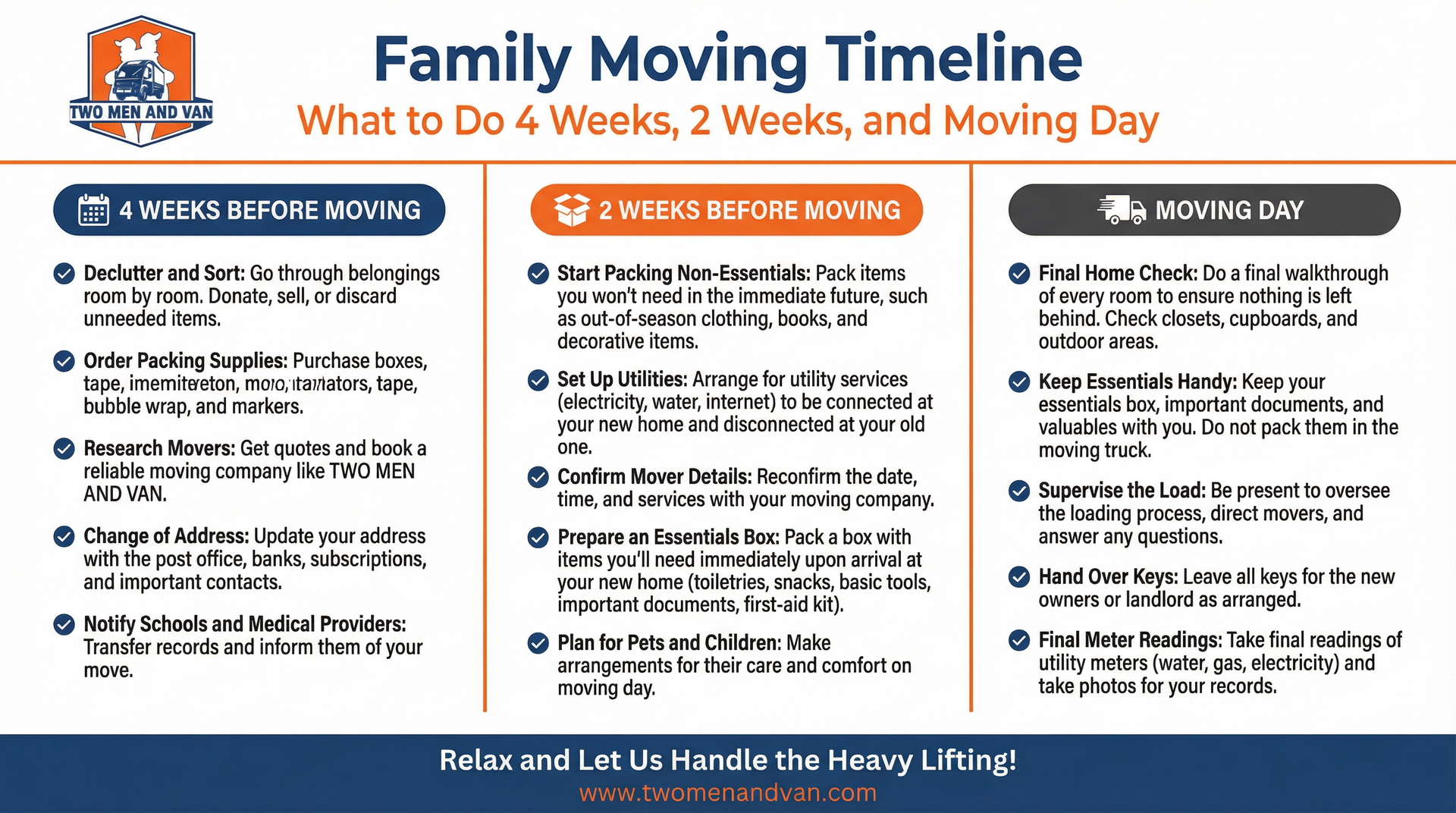
Four weeks before the move
- Declutter room by room: reduces the total volume of items to pack and move
- Book your moving company: secures your preferred date and crew
- Notify schools and medical providers: ensures records transfer on time
- Order packing supplies: stock up before the rush
Two weeks before the move
- Pack non-essential rooms first: guest rooms, storage areas, and garage items go first
- Confirm logistics with your movers: verify timing, truck size, and access details
- Prepare children's school transition documents: gather report cards, IEPs, and immunization records
Moving day
- Set up a safe zone for children: a designated space away from the loading area
- Keep the first night box accessible: never load it onto the truck
- Do a final walkthrough: check every closet, cabinet, and outdoor area before departure
If you are managing a last-minute relocation, the team at Two Men and Van also handles emergency moves with quick scheduling and full support.
Packing Strategy for Families: What to Pack First When You Have Kids
When moving with children, the most effective packing strategy starts with the rooms and items your family uses least frequently and works toward the most essential spaces last. This preserves daily routines and keeps children comfortable throughout the process.
Begin with storage areas, guest rooms, and seasonal items. Then move to living room decor, books, and non-essential kitchen items. Pack children's rooms last, and let children keep a small bag of their favorite comfort items, toys, and a blanket accessible throughout the entire process.
Large furniture pieces including bed frames, bunk beds, and wardrobes should be disassembled before moving day. A thorough furniture disassembly guide for moving outlines how to safely break down common household pieces to prevent damage and simplify transport. Stock up on the right materials in advance by reviewing this list of essential packing supplies to avoid last-minute store runs.
What to Pack in a 'First Night Box' for Families (Essentials You'll Actually Need)
A first night box is a separate, clearly labeled container holding everything your family needs for the first 12 to 24 hours in your new home without unpacking any other boxes. It eliminates frantic searching at the end of an exhausting moving day.
Pack one box per family member, or one shared family box with clearly organized sections. Include:
- Children's pajamas and a change of clothes: avoids digging through packed boxes at bedtime
- Favorite stuffed animal or comfort item: provides emotional stability on the first night
- Snacks and small meals: prevents hunger-related stress when the kitchen is not yet set up
- Toiletries for every family member: toothbrushes, soap, shampoo, and medications
- Phone chargers and a small speaker: keeps the atmosphere calm and devices powered
- Bedding for each child: allows immediate setup of sleeping spaces upon arrival
- Nightlights: especially important for younger children adjusting to a new room
Label this box clearly and load it into your personal vehicle, not the moving truck.
How to Child-Proof the Moving Process (Avoid Accidents on Moving Day)
Child-proofing the moving process means creating physical and procedural boundaries that keep children safe while movers, boxes, and furniture are in motion. The greatest risks on moving day include heavy item transport, open entryways, and sharp packing materials.
If possible, arrange for a trusted family member, neighbor, or babysitter to watch young children off-site during the active loading hours. When that is not an option, designate one adult specifically responsible for supervising children rather than splitting attention between kids and moving tasks. Professional movers for families, like the crew at Two Men and Van, are trained to work efficiently in family environments while maintaining awareness of children nearby. Learn more about how professionals safely move heavy items to prevent damage and injury.
Moving Day Game Plan: How to Keep Kids Safe, Busy, and Calm
A clear moving day game plan for families includes designated activities for children, a set supervision schedule, and a structured sequence of tasks so nothing is left to chance. Preparation the night before is the most effective way to reduce moving day chaos.
Pack activity bags for each child the night before moving day. These should include age-appropriate entertainment to cover several hours.
- Activity kits: coloring books, small puzzles, or handheld games keep kids occupied independently
- Snack kits: pre-packed snacks reduce interruptions and prevent hunger-related meltdowns
- Comfort bags: a familiar toy or blanket helps younger children stay calm in an unfamiliar situation
- Charged tablets or devices: pre-loaded with downloaded content for areas without internet access
- Safety zones: a gated or enclosed room away from doorways and stairs reduces accident risk
Stick to normal meal and nap schedules as closely as possible. Even on a busy moving day, familiar timing gives children a sense of structure and predictability.

How to Childproof Your New Home Quickly After Moving In
Childproofing a new home immediately after moving in prevents accidents during the chaotic unpacking period when gates, covers, and safety locks are still in boxes. Prioritize safety before aesthetics or organization.
Walk through every room before allowing children to roam freely. Check for exposed outlets, unsecured heavy furniture, accessible cleaning supplies, and unlocked windows. Install outlet covers, cabinet locks, and door knob covers before unpacking begins. Once the home is structurally safe, focus on setting up children's spaces first. Professional home setup and furniture assembly services can quickly reassemble cribs, bunk beds, and bedroom furniture so children have a safe, comfortable space on the first night.
For families setting up outdoor areas, professional installation teams can handle outdoor recreation and playground equipment safely and correctly. If your new home includes a trampoline, having it inspected or reinstalled through a qualified trampoline repair and setup service ensures it meets current safety standards. Families adding a basketball hoop to the driveway can also explore options for basketball hoops suited to smaller driveways and limited spaces.
Common Mistakes Parents Make When Moving with Kids (and How to Avoid Them)
The most common mistake parents make when moving with kids is trying to manage every task alone without delegating or outsourcing any part of the process. Moving day fatigue sets in quickly, and when adults are exhausted, child supervision and packing quality both suffer.
Other frequent mistakes include:
- Packing children's rooms too early: disrupts comfort and routine in the final days before the move
- Skipping the first night box: leads to frantic unpacking at the end of an already long day
- Underestimating heavy furniture logistics: results in injuries or damage when attempting DIY transport
- Forgetting to transfer school and medical records: causes delays that affect children's care and enrollment
- Not communicating the move to kids in advance: triggers anxiety, resistance, and behavioral changes
Families relocating from Baltimore, Rockville, or Bethesda who need cost guidance can review how much movers cost in Baltimore, MD to budget accurately and avoid last-minute financial stress.
How Professional Movers Help Families Move Faster and Safer
Professional movers reduce the physical and logistical burden of a family move by handling heavy transport, careful packing, and time-sensitive coordination that most families cannot manage efficiently on their own. The result is a faster, safer, and significantly less stressful experience for both parents and children.
Two Men and Van brings trained crews who arrive on time, handle belongings with care, and work efficiently so your family spends less time in transition. Whether your move is local within Maryland or Virginia, or longer distance, the team is equipped to manage the full scope of your relocation. Families with older relatives involved in the move can also explore assisted living transition services for coordinated multi-generational moves.
For gym equipment, heavy treadmills, or bulky fitness gear, hiring professional movers for home gym equipment prevents injuries and protects expensive machines during transport. If your move involves crossing state lines, review our interstate movers guide for a complete overview of what long-distance family moves require.
Families should also be aware of their rights when moving household goods. The Surface Transportation Board's household goods moving resource outlines the process for addressing lost or damaged items if issues arise during your move.
For home office setups in the new home, professional office chair and workstation assembly services can handle ergonomic furniture quickly so remote-working parents are productive from day one.
Need Help Moving with Kids? Let Our Team Handle the Heavy Lifting
Moving with children does not have to be chaotic. Two Men and Van provides family-friendly moving services across Maryland, Washington DC, Delaware, Pennsylvania, and Northern Virginia. From packing and loading to transport and reassembly, the team handles every step so you can stay focused on your family.
Whether you are moving locally in Arlington, Alexandria, Wilmington, or Harrisburg, or planning a longer relocation, the crew at Two Men and Van is ready to help. Request your free quote today and schedule a stress-free family move with a team that treats your home like their own.
Frequently Asked Questions About Stress-Free Family Moving Tips
How far in advance should I start planning a move with kids?
Start planning at least four to six weeks before your moving date when children are involved. This gives you enough time to prepare children emotionally, sort belongings, book professional movers, and handle school and medical record transfers without rushing.
What is the safest way to keep children away from movers on moving day?
Designating a specific supervised area, ideally a gated room or a neighbor's home, keeps children away from the loading zone where the highest risk of accidents occurs. Assigning one adult solely to child supervision on moving day is the most effective safety strategy.
Should kids help pack their own boxes when moving?
Involving children in packing their own boxes builds a sense of control and reduces anxiety about the move. Give them age-appropriate tasks, such as placing toys or books in labeled boxes, and allow them to keep a small comfort bag accessible throughout the entire moving process.
What should go in a first night box for a family with young children?
A family first night box should include pajamas and a change of clothes for each child, comfort items like a stuffed animal or blanket, toiletries, snacks, phone chargers, nightlights, and any medications. Load this box into your personal vehicle rather than the moving truck.
How do professional movers make family moves safer?
Professional movers are trained to transport heavy furniture and large items safely, reducing the risk of injury to family members who might otherwise attempt DIY lifting. They also work efficiently, which shortens the active moving period and minimizes the time children are exposed to an unsecured environment.
Is it worth hiring movers when relocating with children?
Hiring professional movers when relocating with children significantly reduces physical strain, shortens the overall moving timeline, and allows parents to focus on supervising and supporting their kids rather than managing logistics alone. The investment pays off in safety, speed, and reduced stress for the entire family.
What should I childproof first when moving into a new home?
Prioritize outlet covers, cabinet locks, window guards, and securing heavy furniture like bookshelves and dressers to the walls before allowing children to explore any room. Address the rooms children will use most, including bedrooms and bathrooms, before tackling the rest of the home.
Related Topics
- White Glove Delivery for Furniture and High-Value Items: What to Expect
- How Setup and Placement Services Save Time and Prevent Damage During Your Move
- Piano and Specialty Item Moving: Why You Need Experts for the Job
- The Ultimate Guide to Packing Fragile Items for a Safe and Damage-Free Move
Connect With Us
Stay connected with us for moving tips, customer stories, special promotions, and behind-the-scenes content. Follow Two Men and Van on social media to get helpful advice and updates on our services across Maryland, DC, Northern Virginia, Pennsylvania, and Delaware.
- Facebook - Join our community for moving tips and seasonal offers
- Instagram - See real moves, packing hacks, and customer testimonials
- Instagram Washington - Follow our Washington area team for local moving insights
Get inspired, ask questions, and see why thousands of customers trust Two Men and Van for their interstate and local moves.