
How Professional Post Move Setup Gets Your Home Appliances Connected Safely on Day One

Post move setup can include unpacking priorities, appliance placement, furniture positioning, room organization, packaging removal, and preparation for final utility or appliance connections. Depending on the appliance and property, specialized electrical, plumbing, gas, or technical hookups may require qualified professionals.
- Position major appliances before filling nearby spaces.
- Keep access to utility connections clear.
- Unpack essential rooms before decorative items.
- Organize boxes by their destination room.
- Identify hookups that require qualified trades.
Moving Day Ends Before the Home Is Ready
Arriving at your new address does not mean the move is finished. Post move setup helps turn delivered belongings into usable rooms. It brings order to appliance placement, essential unpacking, and furniture positioning while leaving specialized connections to the right professionals.
Without a plan, boxes can block the bathroom, beds can remain behind stacked furniture, and laundry appliances can await connection. Meanwhile, utility-dependent equipment may need a separate appointment before anyone can use it.
A practical move-in setup plan tackles those problems in order. First, place large items and identify connection needs. Then, unpack essential rooms and remove unnecessary packaging. Whether you are entering a Washington, DC apartment or a Maryland family home, the goal is everyday function.
What post move setup includes
Post move setup includes appliance placement, unpacking assistance, furniture positioning, room organization, packaging removal, and preparing the home for final connections and everyday use. It differs from delivery because it considers how the household will actually use each room.
Preparation helps, too. With professional pre-move preparation services, room labels and organized packing can make essential belongings easier to locate after unloading.

Appliances Need Placement Before Final Connection
Major appliances should reach their planned positions before smaller boxes fill the surrounding space. This keeps delivery routes open and gives installers access to utility points. However, placement does not confirm compatibility or readiness for use; appliance requirements and property conditions still need attention.
Check fit, clearances, and floor conditions
A refrigerator that fits through the front door may still struggle around a kitchen corner. Similarly, a freezer needs enough space for its lid or door to open.
Before final placement, consider:
- Refrigerators: Door clearance, wall clearance, ventilation, and access to any water connection.
- Washers: Floor condition, water supply, drainage access, and manufacturer requirements for transport restraints.
- Dryers: Door swing, utility access, required ventilation, and the appliance’s electric or gas configuration.
- Freezers: Available floor space, ventilation, door movement, and manufacturer guidance after transport.
- Dishwashers: Cabinet fit, water and drain locations, and installation needs that may require specialist work.
Manufacturer instructions should guide final appliance setup, including handling transport restraints and any waiting period before operation. Do not assume every refrigerator, freezer, or washer follows the same rules.
For a Northern Virginia townhouse move, professional appliance moving services can help coordinate transport and positioning. Keep the installation area accessible until the responsible installer completes any required work.
Review utilities before expecting a working appliance
An appliance’s arrival does not establish that the property has suitable connections. Therefore, confirm the following before planning around immediate use:
- Existing electrical outlets and any required dedicated circuits.
- Water supply and drain connections.
- Dryer vent location and condition.
- Gas connections and appropriate specialist involvement.
- Property restrictions, manufacturer instructions, and installer requirements.
| Appliance | Moving and placement support | Connection planning |
|---|---|---|
| Refrigerator | Transport and position with required access space | Confirm electrical suitability and any water-line work |
| Washer | Move into the laundry area with connections accessible | Confirm water, drainage, and transport-restraint requirements |
| Dryer | Position near the intended utility location | Confirm power or gas requirements and vent suitability |
| Freezer | Place with door clearance and ventilation space | Follow manufacturer guidance before operation |
| Dishwasher | Deliver and stage for installation | Arrange appropriate plumbing, electrical, and installation work |
Electrical, plumbing, gas, or specialty appliance connections may require appropriately qualified professionals. Depending on the work, that could mean an electrician, plumber, gas technician, or appliance technician.
Movers can help position appliances for final connection. However, moving assistance should not replace qualified trade work or a property-specific installation assessment.
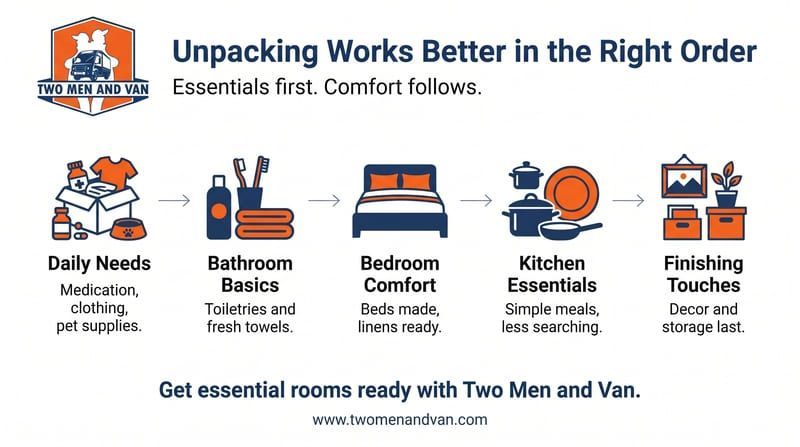
Unpacking Works Better in the Right Order
Essential unpacking should follow your household’s immediate needs rather than the order boxes leave the truck. Start with the items needed to sleep, wash, eat, and manage daily routines. After those needs have a place, decorative pieces and long-term storage can wait.
Open the boxes that support daily life
For a family arriving in Pennsylvania, school clothes and children’s bedding may matter more than a finished living room. Likewise, someone working remotely may need a clear desk before unpacking books.
A useful unpacking sequence includes:
- Bathroom basics: Towels, toiletries, toilet paper, and everyday personal items.
- Bedroom essentials: Bedding, pillows, daily clothing, and accessible bedside belongings.
- Medication and accessibility items: Keep these with the person who needs them rather than buried in general boxes.
- Kitchen necessities: Cups, plates, utensils, basic cookware, and selected small household appliances.
- Children’s and pet supplies: Familiar bedding, food, feeding items, and immediate necessities.
- Work essentials: Computer equipment, chargers, documents, and internet appointment details.
Before setting out a kettle, toaster, or coffee maker, choose a suitable counter location and follow its instructions. Meanwhile, keep appliance manuals together so installers and household members can find them.
Leave decor, seasonal linens, and storage items until essential rooms work. This approach makes unpacking help useful even when you do not need every box emptied.
Why our team helps essential rooms come together
Two Men and Van provides residential moving and move-in support for homeowners, renters, families, seniors, landlords, and property managers. Its services support appliance moving, unpacking assistance, furniture positioning, room organization, and packaging removal within the agreed scope.
From pre-move preparation to assisted living transitions and last-minute moves, coordinated project support helps reduce move-in setup guesswork. Moving-day coordination also helps customers prioritize essential rooms instead of opening every box at once.
Room Setup Prevents Repeated Heavy Lifting
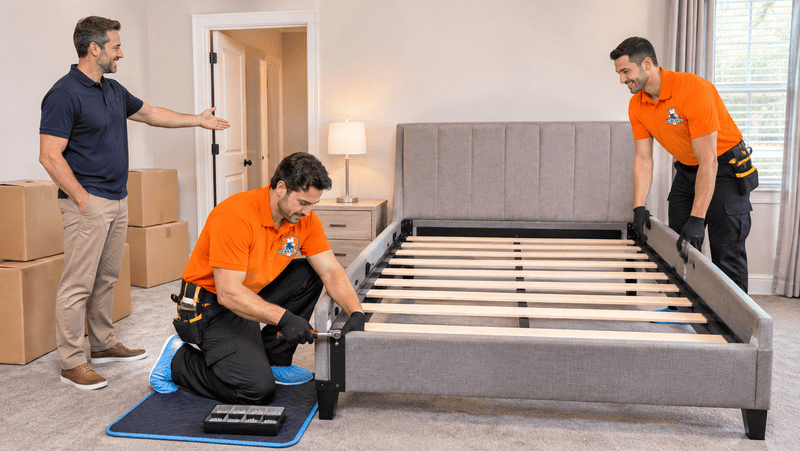
Furniture positioning should happen before smaller belongings spread across floors and surfaces. A basic room plan helps movers place large pieces where you expect to use them. As a result, you can avoid some repeated lifting, blocked doorways, and unnecessary trips between rooms.
Give each room a clear purpose
Start with a brief walkthrough before unloading. Then, agree on bed placement, dining furniture positions, and living room arrangements. For example, a Delaware renter may need the dining area to double as a workspace. Positioning that table first helps determine where nearby boxes belong.
Use these room setup priorities:
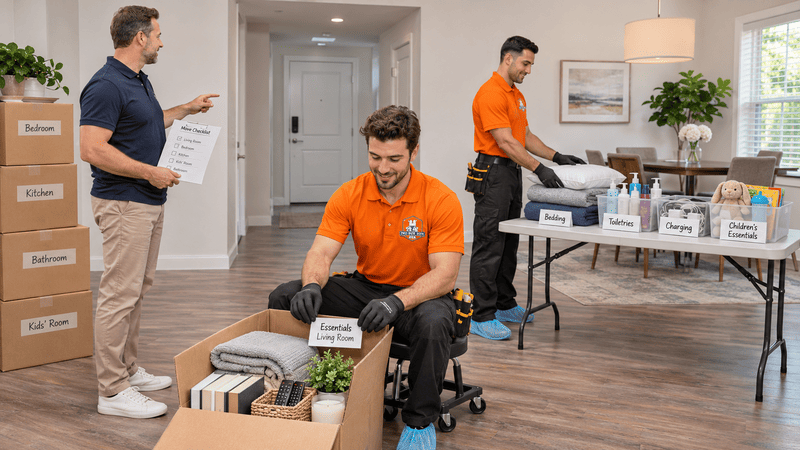
- Match room labels on boxes with labels at the destination.
- Place beds before stacking bedroom boxes around them.
- Keep kitchen boxes away from appliance bays and utility access.
- Position sofas and dining furniture without blocking main routes.
- Leave hallways, exits, and everyday walking paths clear.
- Gather empty packaging in an agreed collection area as unpacking progresses.
Good box placement matters as much as furniture placement. Otherwise, a clearly labeled bedroom box can still create extra work when someone leaves it downstairs.
Plan bulky furniture before it reaches the doorway
Large beds, desks, and wardrobes may need preparation before relocation. Where appropriate, furniture disassembly and relocation services can help address bulky pieces before they meet narrow stairs or doors. Keep labeled hardware and assembly instructions with the relevant item. Also, confirm assembly tasks in advance rather than assuming delivery includes them.
Finally, agree on packaging removal. Set aside manuals, warranty paperwork, and packaging you may need to retain before clearing cardboard and wrapping.

Senior Moves Need a Different Priority List
Senior transitions often benefit from a smaller, more deliberate setup plan centered on familiar routines. Essential furniture, bathroom access, and frequently used belongings should take priority over filling every shelf. Family coordination also helps align delivery, room readiness, and any community move-in requirements.
Build the plan around the person moving
Ask the person moving which belongings they want within reach first. Their preferred chair, bedside lamp, or morning tea supplies may deserve priority over decorative furniture.
For assisted living moving, confirm what the residence provides before bringing duplicate furniture or appliances. Additionally, check delivery hours, elevator arrangements, and any restrictions on personal electrical items.
A practical first-stage setup includes:
- Essential furniture positioned around agreed walking paths.
- A ready bedroom with bedding and familiar belongings.
- Clear access to the bathroom.
- Medication storage identified by the resident, family, or responsible care team.
- Kitchen essentials placed where permitted and convenient.
- Boxes kept out of frequently used areas.
For transitions within Maryland or into communities in Delaware and Pennsylvania, timing deserves particular attention. For instance, family arrival and building access may need to align with furniture delivery. Assisted living transition moving services can support the physical relocation and organization of belongings. However, movers do not replace care staff or guarantee that a layout meets individual accessibility needs.
After placement, allow time for the resident and family to review the room. Small adjustments are easier before every remaining box is open.
Last Minute Moves Create Setup Gaps
Short-notice relocations often leave households with mixed boxes, unfinished packing, and incomplete utility arrangements. Organized support helps separate immediate needs from work that can wait. The first goal is a usable sleeping area, bathroom access, and clear routes rather than a completely unpacked home.
Stabilize the first night before tackling everything
An urgent Washington, DC apartment move may involve a narrow elevator window and little help. Meanwhile, a family entering Northern Virginia housing could discover that utilities start later than expected.
Common setup gaps include:
- Mixed or lightly labeled boxes that hide essentials.
- Unexpected access restrictions or limited building schedules.
- Missing furniture parts that delay bed or table assembly.
- Appliance delivery that does not align with installer appointments.
- Delayed utilities that require temporary household arrangements.
- Limited help for priority unpacking and room organization.
With last-minute residential moving services, customers can discuss essential-item placement alongside transport needs. However, confirm the requested support and scheduling rather than assuming every task fits the same visit.
If an appliance cannot operate yet, plan around that limitation. Do not improvise utility connections to keep pace with the move.
What affects the cost of setup support
Move-in costs depend on project scope, actual property access, and requested services. Room count, box quantity, furniture volume, and appliance quantity all affect the work involved.
Similarly, partial unpacking differs from organizing an entire household. Furniture positioning, appliance moving, and packaging removal can also change project duration. Stairs, elevator bookings, long carrying routes, and multiple stops may add complexity. Assisted living transitions and last-minute scheduling can require additional coordination, too.
For a useful estimate, describe the property and list the rooms and tasks you want completed first. Also, clarify whether qualified trades will quote specialized hookups separately.
Book Post Move Setup Today
Appliance placement, unpacking priorities, furniture positioning, room organization, and packaging removal work best as one coordinated plan. Two Men and Van helps customers discuss post move setup around the rooms they need first and the connections that need separate attention.
Explore residential moving and setup services to plan transport, household placement, and practical move-in readiness support. Share your appliance list, access details, and essential-room priorities so the team can discuss the requested scope.
Get essential rooms ready for move-in day
Homeowners, renters, families, seniors, landlords, and property managers across Washington, DC, Maryland, and Northern Virginia can request assistance. Service also extends across Delaware and Pennsylvania, with project details and scheduling confirmed individually.
Whether you need appliance placement or focused unpacking help, request post move setup assistance from Two Men and Van. Explain what needs to work first, and identify any specialist installation appointments already arranged.
Frequently Asked Questions
What does post move setup include?
Typically, post move setup includes appliance placement, essential unpacking, furniture positioning, room organization, and agreed packaging removal.
Can movers help position appliances after delivery?
Movers can help position appliances for final connection, subject to access, appliance requirements, and the agreed service scope.
Do movers connect washers, dryers, or refrigerators?
Connection work depends on the appliance and property, and specialized hookups may require qualified trades or appliance technicians.
Can movers help unpack essential rooms?
Unpacking assistance can prioritize kitchen basics, bedding, bathroom supplies, daily clothing, and other immediate household needs.
When should I schedule move-in setup assistance?
Arrange support once you know your move date, building access rules, utility status, and essential-room priorities.
Connect With Us
Stay connected with us for moving tips, customer stories, special promotions, and behind-the-scenes content. Follow Two Men and Van on social media to get helpful advice and updates on our services across Maryland, DC, Northern Virginia, Pennsylvania, and Delaware.
- Facebook - Join our community for moving tips and seasonal offers
- Instagram - See real moves, packing hacks, and customer testimonials
- Instagram Washington - Follow our Washington area team for local moving insights
Get inspired, ask questions, and see why thousands of customers trust Two Men and Van for their interstate and local moves.