How to Move Large Appliances Safely Without Scratches, Leaks, or Damage
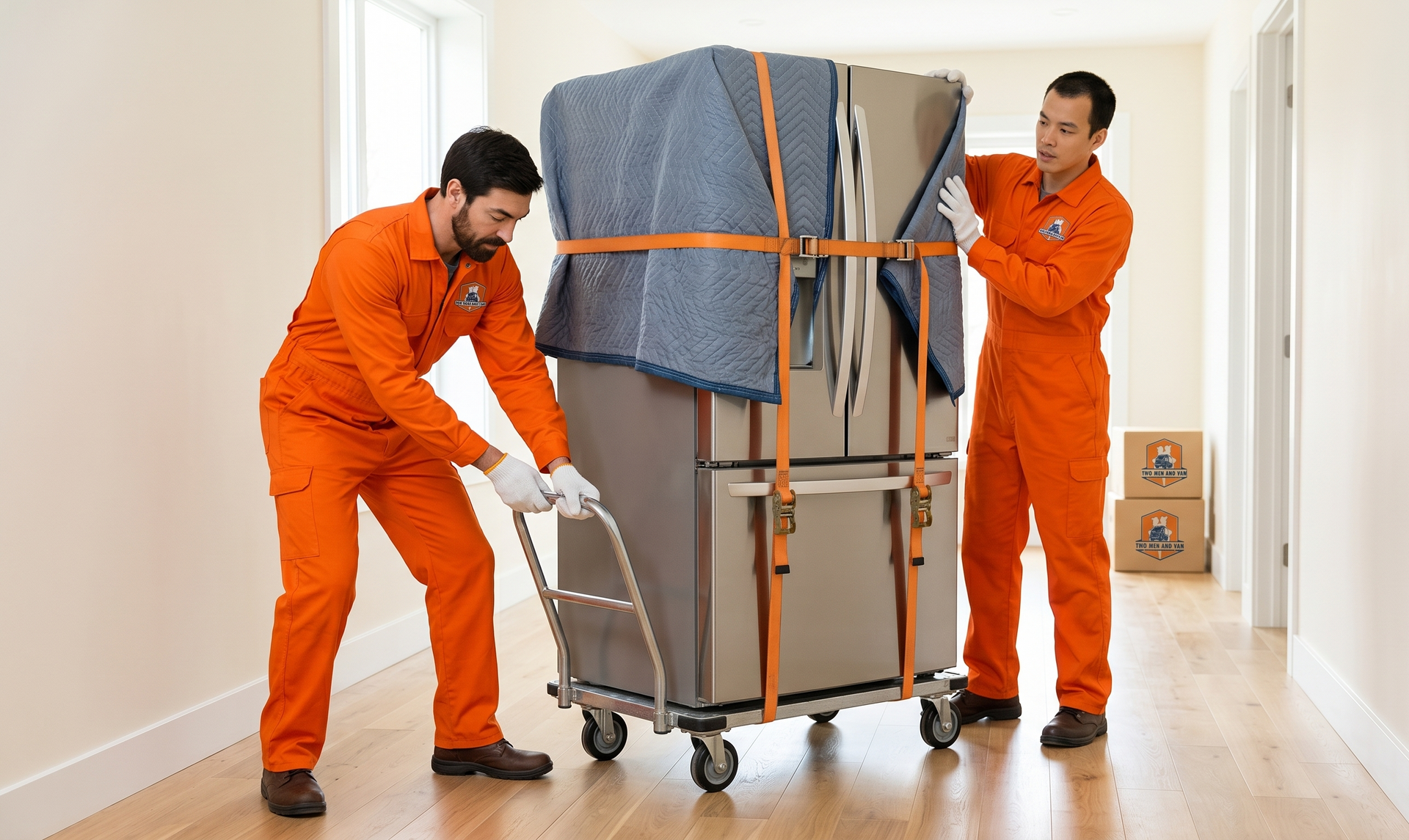
Moving large appliances safely starts with planning the route, disconnecting each unit correctly, and using the right protection before anything is lifted. That is the short answer most people need, because one rushed move can leave behind scratched floors, dented doors, leaking hoses, damaged walls, and an appliance that no longer works properly.
The risk rises fast with refrigerators, washers, dryers, ranges, freezers, and commercial break-room equipment. Tight hallways, apartment stairwells, loading ramps, and uneven trucks only make the job harder. The safest approach is to prepare every appliance for transport, protect the home and the machine, and bring in experienced movers when the weight, access, or timeline leaves little room for error. That is where Two Men and Van can make the whole project smoother.
Key Takeaways
- Pre-move planning matters because measurements, shutoff checks, and route protection prevent many of the scratches, leaks, and access problems that happen before the appliance even reaches the truck.
- Refrigerators, washers, dryers, ranges, built-ins, and smart appliances need extra care because they combine weight, delicate finishes, and vulnerable internal parts.
- Proper disconnection and full draining reduce water damage, protect floors and walls, and make loading far safer for homes, apartments, offices, and rental properties.
- The right tools help, but difficult routes, stairs, tight doorways, and time-sensitive moves are often better handled by Two Men and Van.
- Hiring experienced professional appliance movers is often the safest way to move large appliances without damage, especially across Maryland, Washington DC, Delaware, Pennsylvania, and Northern Virginia.
What Should You Do Before Moving Large Appliances
Before moving any large appliance, measure the path, empty the unit, protect floors, and plan the lifting route, vehicle space, and shutoff points. Good prep is what prevents scratches, dents, leaks, and rushed lifting mistakes. It also shows you early when professional appliance movers are the safer option.
Start with access and measurements
Measure doorways, stairwells, hallways, elevator openings, and the appliance itself. Then compare those numbers before move day, not while the appliance is halfway through a doorway.
Appliance moving means preparing, disconnecting, lifting, protecting, loading, and transporting a unit without damaging the machine or the property around it.
A solid pre-move checklist should include:
- Emptying shelves, bins, and removable parts
- Measuring all access points and turning clearances
- Laying floor runners or protective boards
- Identifying water, gas, and electrical shutoffs
- Confirming truck space and tie-down points
- Budgeting ahead by reviewing what professional movers in Baltimore, MD typically charge
For interstate household goods planning, it also helps to review household goods moving guidance from the Surface Transportation Board so expectations are clear before the move begins.
Plan for the whole property, not just the appliance
Appliance moves often happen during bigger relocations, renovations, or tenant turnovers. If you are also moving boxed items, furniture, or storage pieces, coordinated moving services for mixed household items can reduce bottlenecks and keep the appliance portion of the move from becoming an afterthought.
How Do You Disconnect Appliances Safely Before a Move
You should disconnect appliances slowly, in the correct order, and only after power, water, or gas sources are shut off. Safe disconnection prevents leaks, electrical issues, and broken fittings, and it also reduces the chance of internal parts shifting during transport.
Water, power, and gas all need different handling
Unplug electric appliances first after confirming the area is dry. For washers and refrigerators with water lines, shut off the supply valve, disconnect hoses carefully, and drain any remaining water into a towel or shallow pan.
Gas appliances need extra caution. Dryers and ranges connected to gas should be disconnected and capped by a qualified technician, because forcing a line loose is never worth the risk.
Keep parts organized
Tape cords in place, bag small fittings, and label hoses or vent pieces so reinstallation goes faster later. Remove shelves, trays, and glass parts from refrigerators, microwaves, and specialty appliances and pack them separately.
For homes, apartments, and rental turnovers, this step matters just as much as the lifting itself. A properly disconnected appliance is far less likely to leak in a truck, bang around inside, or create delays at delivery.
Which Appliances Need Extra Care During Transport
Refrigerators, freezers, washers, dryers, ranges, built-in units, and smart appliances usually need the most transport protection. They combine weight, awkward size, delicate finishes, and vulnerable internal components, so even a short move can cause damage if the appliance is tilted, bumped, or packed carelessly.
High-risk appliances to watch closely
Some units are simply less forgiving than others:
- Refrigerators and freezers can suffer coolant or compressor issues if moved improperly
- Washing machines can leak from hoses, pumps, or trapped water
- Dryers may have fragile vent connections or gas hookups
- Ranges can have breakable knobs, glass tops, and uneven weight distribution
- Built-in or panel-ready appliances can scratch easily during removal
- Smart appliances benefit from the same care used when moving electronics and computer equipment safely
Commercial clients should also think beyond the appliance itself. Break-room refrigerators, ice machines, and microwaves often move alongside desks, storage, and shared equipment, so coordinated office furniture moving support can help business moves stay organized and less disruptive.
For especially oversized or awkward units, specialty teams offering professional moving services for heavy equipment and large items can also be relevant when standard handling is not enough.
Can Appliance Moves Damage Floors, Walls, or Door Frames
Appliance moves can easily damage floors, walls, and door frames if the route is tight, the load shifts, or the appliance is dragged instead of controlled. Most property damage happens in transitions, especially at corners, stairs, thresholds, and truck ramps.
Where property damage usually happens
Hardwood floors get gouged when rollers or appliance feet catch an edge. Tile cracks when too much point pressure hits one spot. Painted walls and trim take the hit when an appliance swings wide at a turn.
Door-frame damage is common in older homes, apartments, and office buildings where clearances are already limited. In those cases, surrounding furniture may need to be removed first, and fast emergency furniture disassembly help can keep a crowded move from stalling.
Some layouts also require careful disassembly and relocation planning for bulky items because the challenge is not only weight. It is the combination of angle, clearance, and safe reassembly at the destination.
How Do You Prevent Leaks During Appliance Moving
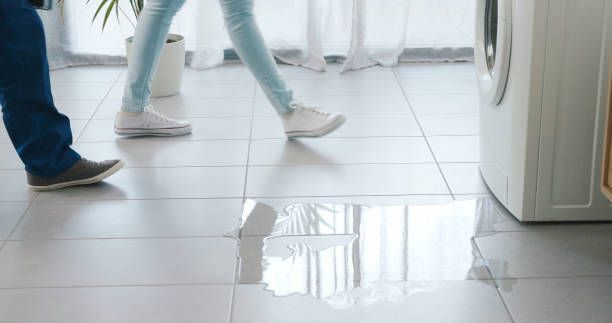
You prevent leaks by shutting off supply lines early, draining hoses and reservoirs fully, drying the interior, and keeping the appliance upright whenever possible. Leak prevention matters because even a small amount of trapped water can stain floors, soak moving pads, and create transport damage.
Focus on hidden water sources
Washers, refrigerators with ice makers, portable dishwashers, and some water-dispensing units hold more water than people expect. After disconnecting lines, let hoses drain completely. Wipe down connection points and leave doors open long enough for moisture to evaporate.
Freezers and refrigerators should be emptied and defrosted in advance. Washers should be drained fully, and loose hoses should be secured so they do not drip through the truck.
A simple leak-prevention routine:
- Shut off water at the source
- Disconnect hoses over towels or a drain pan
- Empty reservoirs, pumps, trays, and filters
- Dry the interior and leave doors open briefly
- Wrap connection ends before loading
- Keep the unit upright and stable in transit
This is one reason many homeowners, landlords, and property managers hire a heavy appliance moving service instead of improvising under time pressure.
What Tools Help Move Heavy Appliances More Safely
The safest appliance moves rely on appliance dollies, straps, sliders, moving blankets, floor protection, and proper tie-down equipment. The right tools reduce strain, control the weight, and keep both the appliance and the property from taking the hit during tight maneuvers.
Use tools that control movement, not just force
A basic hand truck is rarely enough for a refrigerator or front-load washer. Appliance dollies with straps help keep the load upright, while shoulder straps can improve control on stairs when used by trained movers.
Useful equipment often includes:
- Appliance dolly with stair-climbing support
- Forearm or shoulder lifting straps
- Furniture sliders for short controlled shifts
- Moving blankets and corner guards
- Floor runners, ram board, or plywood sheets
- Ratchet straps for truck stabilization
When the appliance is extremely heavy, awkward, or valuable, relying on professional movers for heavy items is usually safer than trying to make light-duty tools do a heavy-duty job.
Two Men and Van can also help when the project involves more than one challenge, because their full range of moving and support services can cover broader residential and commercial needs.
Common Appliance Moving Mistakes That Cause Damage
Most appliance damage comes from rushing the prep, skipping protection, dragging the unit, or loading it without proper support. Small mistakes add up quickly, especially in apartments, offices, and busy move-outs where timing pressure makes people cut corners.
The mistakes that show up most often
These problems cause many of the dents, leaks, and repair calls people wish they had avoided:
- Moving before the unit is fully emptied or defrosted
- Forgetting to secure shelves, cords, doors, or loose parts
- Tilting the appliance too far or laying it down carelessly
- Dragging across wood, tile, or vinyl floors
- Underestimating stairways, ramps, and truck loading angles
- Assuming damage protection is automatic without understanding liability protection options for household goods moves
Why DIY moves go wrong
A move can look simple until a washer starts dripping in the hallway or a refrigerator clips the trim at the front door. That is why professional appliance movers focus on sequencing, stabilization, and route control, not just lifting strength.
How to Protect Appliances During Loading and Transport
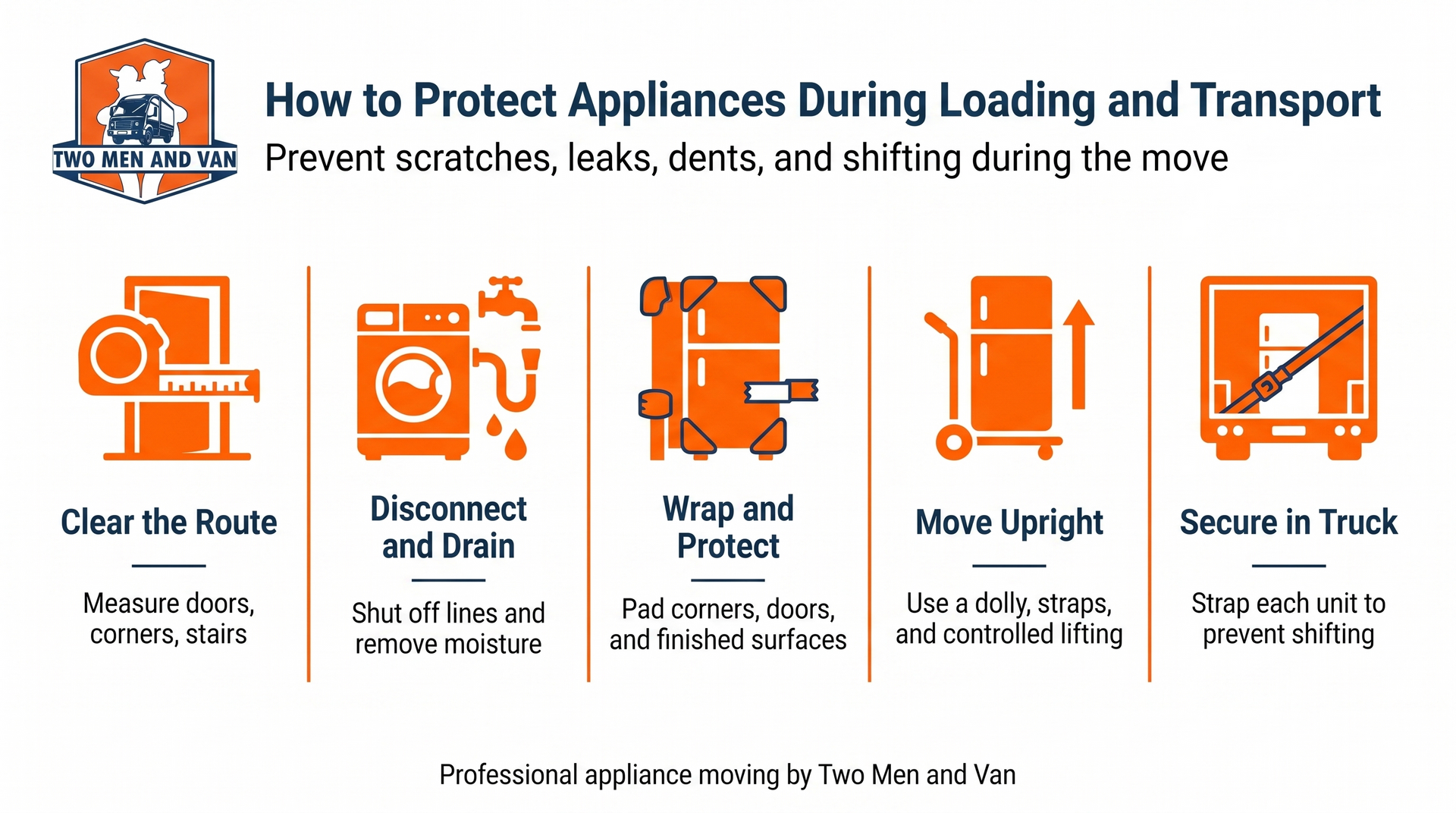
Protecting appliances during loading and transport means padding exposed surfaces, keeping units upright when required, securing doors and cords, and anchoring everything tightly inside the truck. Good transport protection prevents dents, shifting, finish damage, and internal stress on the appliance.
Protect the finish first
Stainless steel, enamel, and glass-front appliances scratch easily. Wrap finished surfaces with clean moving blankets, then secure the wrap so it does not slide during loading. For premium or high-visibility appliances, white glove delivery handling reflects the level of care many customers want for finished surfaces and room placement.
Stabilize the appliance in the truck
Never leave heavy appliances free-standing in transport. Load them against a stable wall, use ratchet straps, and keep lighter items from pressing into vulnerable sides or controls.
A simple loading summary:
- Pad corners, handles, and finished faces
- Secure doors so they do not swing open
- Keep units upright unless manufacturer guidance allows otherwise
- Strap each appliance independently
- Leave no room for side-to-side shifting
That approach is what helps people move a refrigerator safely, move a washer and dryer safely, and avoid costly surprises at delivery.
Move Heavy Appliances Without the Stress and Guesswork
The smartest way to move heavy appliances is to plan early, disconnect correctly, protect the property, and use experienced help when the route, weight, or timing gets complicated. That is exactly where Two Men and Van adds value for homes, apartments, offices, renovation projects, replacements, and full moving situations.
If you are relocating in Maryland, Washington DC, Delaware, Pennsylvania, or Northern Virginia, including Baltimore, Rockville, Bethesda, Arlington, Alexandria, Wilmington, and Harrisburg, Two Men and Van can help you move large appliances safely without turning the job into a repair project. Their team helps reduce leak risks, floor damage, wall damage, loading problems, and avoidable delays, whether you are swapping out one refrigerator or coordinating a larger property move.
For customers who need broader setup support after delivery or relocation, projects sometimes overlap with services like senior living furniture setup for bedrooms and care spaces or even basketball hoop installation support for a new property. When you are ready to schedule a safer appliance move, the next step is simple: contact Two Men and Van.
Frequently Asked Questions About Moving Large Appliances Safely
Do refrigerators need to be unplugged before moving?
Yes, refrigerators should be unplugged before moving so the interior can warm, defrost if needed, and dry out properly. That helps prevent water leaks, odor buildup, and moisture damage during transport.
How long should a washer or dryer sit before transport?
A washer should be drained and dried before transport, and both units should be disconnected well ahead of loading if possible. Giving yourself extra time helps you catch leftover water, secure hoses, and avoid rushed mistakes.
Do appliance movers disconnect gas or water lines?
Sometimes, but not always. Gas disconnection and capping should generally be handled by a qualified technician, while water lines may be disconnected by movers depending on the scope of service and local practice.
How do you stop a washer or refrigerator from leaking during a move?
Shut off the water supply, disconnect lines carefully, and drain all hoses, reservoirs, and trays completely. Drying the interior and keeping the unit upright also reduces the chance of drips and transport-related leaks.
Can large appliances fit through doorways without damage?
Yes, but only if the path is measured correctly and the turning space is realistic. Many doorway problems come from corners, trim, and stair landings, not the doorway width alone.
What equipment is used to move heavy appliances safely?
Appliance dollies, lifting straps, moving blankets, sliders, floor protection, and truck tie-downs are the most common tools. The right setup helps control weight and reduces damage to both the appliance and the property.
When is professional appliance moving better than DIY?
Professional help is usually better when the appliance is very heavy, the route is tight, stairs are involved, or the move has to stay on schedule. It is also the smarter option when you want to avoid damage claims, leaks, or injury risk.
Should appliances stay upright during transport?
In most cases, yes. Keeping appliances upright helps protect internal components and reduces the chance of fluid movement or performance issues after delivery.
Related Topics
- White Glove Delivery for Furniture and High-Value Items: What to Expect
- How Setup and Placement Services Save Time and Prevent Damage During Your Move
- Piano and Specialty Item Moving: Why You Need Experts for the Job
- The Ultimate Guide to Packing Fragile Items for a Safe and Damage-Free Move
Connect With Us
Stay connected with us for moving tips, customer stories, special promotions, and behind-the-scenes content. Follow Two Men and Van on social media to get helpful advice and updates on our services across Maryland, DC, Northern Virginia, Pennsylvania, and Delaware.
- Facebook - Join our community for moving tips and seasonal offers
- Instagram - See real moves, packing hacks, and customer testimonials
- Instagram Washington - Follow our Washington area team for local moving insights
Get inspired, ask questions, and see why thousands of customers trust Two Men and Van for their interstate and local moves.