
Small Apartment Moving Tips for Renters in Baltimore, Washington DC, and Northern Virginia

Moving out of a small apartment is easier when renters plan early, pack with purpose, and solve access issues before moving day. In Baltimore, Washington DC, and Northern Virginia, even a studio or one-bedroom move can turn into a headache when hallways are tight, parking is limited, or furniture refuses to cooperate.
The good news is that most of that stress is preventable. When renters organize the move in the right order and hire movers who understand apartment logistics, the process gets faster, safer, and far less chaotic. Two Men and Van helps apartment residents move with better planning, careful handling, and local experience that fits real-world urban moves.
Key Takeaways
- Renters moving out of studios and one-bedroom apartments should confirm building rules, parking, elevator access, and furniture measurements before moving day sneaks up and starts acting expensive
- Packing order matters more in a small apartment because clutter, loose items, and blocked pathways slow down loading and make tight layouts harder to work through
- Hallways, stairs, elevators, and truck access can affect labor time, timing, and overall moving stress just as much as the number of boxes
- Reducing clutter before the move cuts down on handling time, lowers moving volume, and makes the new apartment easier to set up
- Hiring Two Men and Van helps renters avoid common apartment moving mistakes while getting more efficient, careful, and locally informed support for urban moves
What Should Renters Do Before a Small Apartment Move
Renters should start by confirming building rules, sorting what stays or goes, reserving access, and locking in the moving plan several days ahead. A small apartment move runs better when the details are handled early instead of being fought over on moving day.
Start with the building, not the boxes. Ask management whether you need to reserve an elevator, protect common areas, or provide proof of insurance. Then confirm move-out deadlines, loading rules, and where the truck can legally stop. A lot of moving delays are not caused by packing at all. They happen because nobody checked the access rules.
Next, make a short renter moving checklist. Include utility shutoff dates, address changes, key return, cleaning, and the items you still need to pack. A few days of planning can save hours of confusion later. If you want a simple way to map out the basics, the team at Two Men and Van offers practical guidance on pre-move prep. It also helps to review official household goods moving assistance so you know what questions to ask and what protections matter when hiring movers.
A small apartment move usually means relocating from a studio, efficiency, or one-bedroom unit where limited storage, shared hallways, and tight entry points create more handling pressure than people expect.
How Do You Pack Efficiently in a Small Apartment
Packing efficiently in a small apartment means working by zone, labeling clearly, and keeping only what deserves the trip. Good packing reduces wasted space, speeds up loading, and helps renters stay organized when every square foot matters.
The fastest approach is to pack by function, not by random drawer. In a studio apartment, that may mean grouping kitchen items, work items, sleep essentials, and bathroom items separately even if they all sit close together. That keeps unpacking cleaner and stops your new place from looking like a cardboard ambush.
Use smaller boxes for heavy items and medium boxes for mixed household goods. Also, do not leave bags and loose items floating around the apartment. They slow movers down and increase the chance that something gets missed. For renters who need extra help creating order in a cramped space, professional box packing support can make the process much more efficient. If your move includes a desk setup, monitors, or filing pieces, the same careful thinking used in office furniture moving can help protect work equipment during the transition.
A few packing habits usually save the most time:
- Label each box with room, contents, and priority
- Keep hardware in sealed bags attached to the correct furniture
- Use towels and linens as padding for breakables
- Leave one clear walking lane so boxes do not trap the exit

Which Furniture Should Be Moved First in Tight Spaces
The best furniture to move first in tight spaces is the largest piece that controls the path, usually a sofa, mattress, dresser, or desk. Once that item is out of the way, movers can work faster, turn more safely, and reach everything else without fighting the room.
This is where sequence matters. In a small apartment, a bulky item can block half the usable space. If movers start with loose boxes while a bed frame still clogs the doorway, the room stays cramped and the job drags. It is usually smarter to remove the path-blocking item first, then clear medium furniture, then finish with boxed items and the final loose pieces.
Some furniture should be taken apart before the move even starts. Beds, desks, shelving, and certain dining tables often move more safely when broken down in advance. For pieces that clearly need to come apart, furniture disassembly can prevent scratches, wall damage, and those lovely little panic moments at the door. For heavier items such as sleeper sofas, large dressers, and oversized mattresses, experienced professional movers for heavy items are usually the smarter choice.
If something still will not clear the exit on moving day, last-minute emergency furniture disassembly can keep the move from turning into an awkward hallway standoff.
Can Narrow Hallways and Stairs Slow Down Moving Day
Narrow hallways and stairs can absolutely slow down moving day because they limit turning angles, reduce safe carrying space, and force more careful handling. In apartment buildings, tight access is often the real reason a small move takes longer than expected.
A short hallway with one sharp corner can slow down a couch more than a long driveway ever could. Stairs make things even trickier because each landing changes the lift angle and reduces how quickly movers can reposition. That is why a studio move in an older building can be more demanding than a larger move with easy ground-level access.
This is also why apartment experience matters. Two Men and Van handles studio and one-bedroom apartment moves with the kind of local awareness renters need in Baltimore, Washington DC, and Northern Virginia. And if the apartment includes specialty pieces such as fitness equipment, careful professional moving services for those heavier items can reduce both injury risk and property damage.
How Do You Avoid Building Damage During an Apartment Move
You avoid building damage during an apartment move by protecting entry points, controlling carry angles, and following building procedures before the first item leaves the unit. Careful moving protects more than furniture. It also protects deposits, timelines, and your relationship with building management.
Door frames, lobby corners, handrails, and elevator walls take a beating when a move is rushed. Good movers do not just lift and go. They work with the building layout, control turns, and stay aware of where surfaces can get scraped or dented. Renters should also understand what coverage and protections apply before the move begins. Official guidance on liability protection can help clarify valuation options, while the federal Rights and Responsibilities booklet outlines important expectations around estimates and customer protections.
For delicate pieces, higher-end items, or room-by-room placement needs after delivery, some renters also prefer a more careful white glove delivery style of handling.
Small Apartment Moving Mistakes That Cost Time and Money
The costliest small apartment moving mistakes are packing too late, underestimating access issues, keeping too much, and waiting too long to hire help. These mistakes create delays, increase labor time, and turn a manageable renter move into a pricey mess.
A lot of renters assume a small apartment means a fast move by default. That sounds nice. It is also wildly optimistic in the wrong building. A one-bedroom on an upper floor with no elevator, bad parking, and a large sectional can take far longer than expected. Another common mistake is failing to measure large furniture against doorways, stairwells, and elevator depth before moving day.
Budgeting mistakes hurt too. Moving costs often depend on stairs, heavy items, truck distance from the entrance, and how prepared the apartment is before movers arrive. If you want a better sense of local pricing factors, this guide on how much movers cost in Baltimore helps renters understand what can affect the total.
The mistakes that usually create the biggest problems are:
- Waiting until the final day to finish packing
- Forgetting to reserve the elevator or confirm parking
- Keeping furniture that does not fit the next apartment
- Assuming movers can magically solve bad access with no time impact
How to Plan Parking, Elevators, and Access Ahead of Time
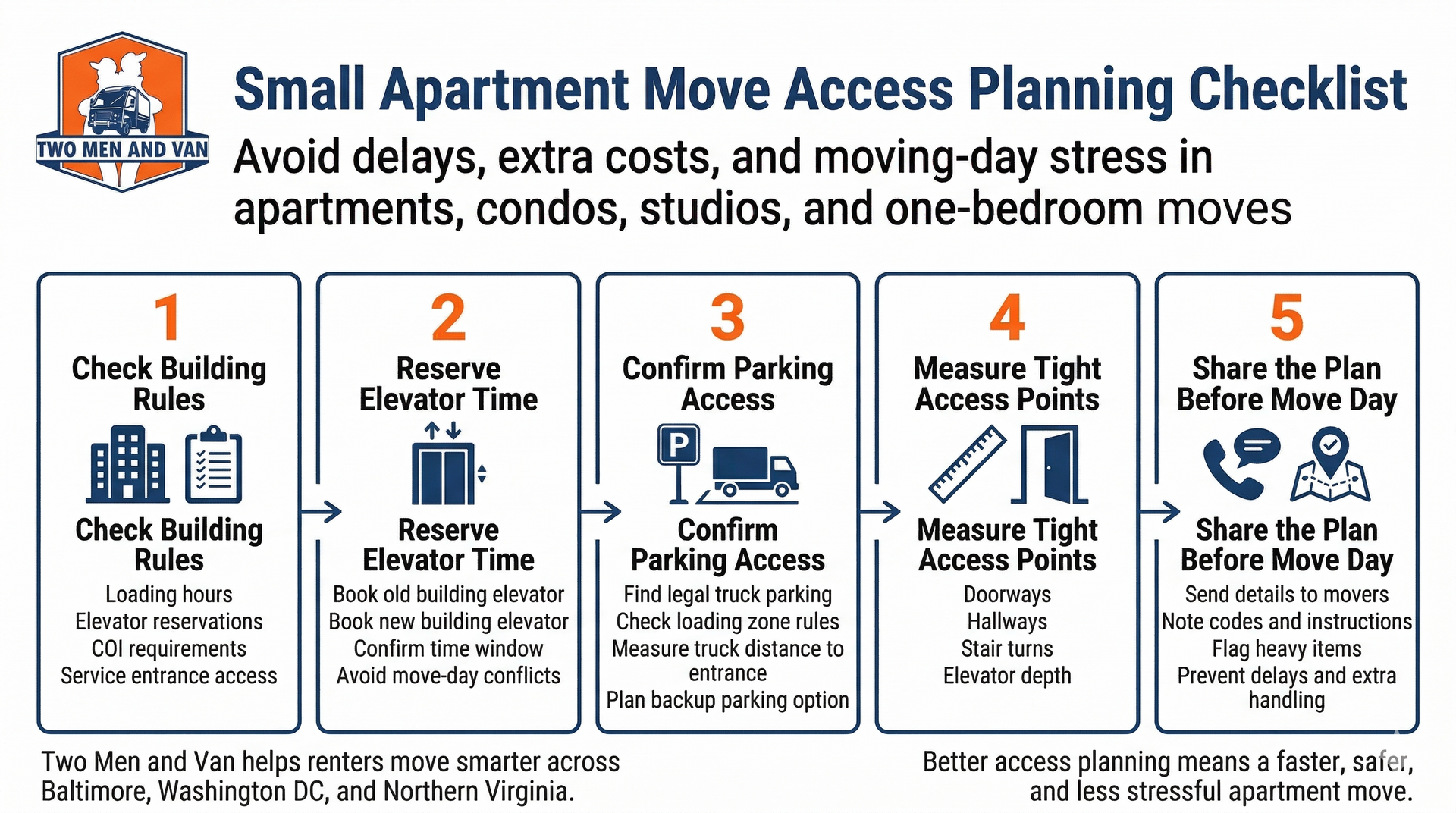
Planning parking, elevators, and access ahead of time means making the route predictable before the truck arrives. Renters should confirm where movers can park, whether the elevator needs a reservation, and how entry will work at both the old and new building.
This step gets ignored way too often, and then suddenly everyone is improvising in traffic while a lease clock is ticking. In dense parts of Baltimore, Washington DC, and Northern Virginia, legal parking may be limited or far from the door. If the truck cannot stop close enough, loading time increases fast. Elevator conflicts cause the same kind of delay, especially in larger apartment buildings and condos.
Before moving day, renters should confirm:
- Truck parking or loading-zone rules
- Elevator reservation times at both locations
- Door codes, service entrances, and loading dock instructions
- Whether large items fit through hallways, stairs, and elevator openings
These details matter because access controls pace, and pace affects stress, cost, and completion time. Renters who need broader support for different types of local moves can also review the full range of moving services available through Two Men and Van.
Smart Ways to Reduce Clutter Before Moving Out
The smartest way to reduce clutter before moving out is to sort by use, condition, and fit before you start boxing everything up. Less clutter means fewer boxes, less labor, and a smoother move from a small apartment where space is already working overtime.
Start with the easy cuts. Get rid of broken storage bins, duplicate cookware, expired pantry items, worn-out linens, and anything you forgot you owned until today. Then move to clothes, décor, and extra furniture. A small apartment punishes clutter because every extra item takes up space while packing, during transport, and again after move-in.
A simple rule works well here: if it will not fit your next layout, will not be used in the next six months, or costs more to move than replace, let it go. This one step often makes the entire move faster and cheaper.
Make Your Small Apartment Move Easier From the Start
A small apartment move goes better when the plan is clear, the access is confirmed, and the movers know how to work through tight layouts without wasting time. Two Men and Van helps renters in Maryland, Washington DC, Delaware, Pennsylvania, and Northern Virginia move apartments, condos, studios, and one-bedroom units with less stress and better coordination from start to finish.
Whether you are moving out of a studio in Baltimore, leaving a DC apartment building, or relocating to a condo in Arlington, Alexandria, Rockville, Bethesda, Wilmington, or Harrisburg, the right help can reduce delays, protect the building, and make the day much easier to manage. When you are ready to hire dependable apartment movers, contact Two Men and Van to get started.
Once the move is done, some households also need help settling in, whether that means
professional furniture assembly for home setup, extra
residential installation support, or ideas for making a tighter property work better, like these tips on the
best basketball hoops for small driveways and limited space.
Frequently Asked Questions About Small Apartment Moving
How early should renters book movers for a small apartment move?
Renters should usually book movers two to four weeks ahead, especially during weekends, month-end dates, and summer moving season. Booking earlier gives you better scheduling options and more time to coordinate building access.
How long does a studio or one-bedroom apartment move usually take?
Most small apartment moves take a few hours, but access conditions can change the timeline quickly. Stairs, long hallways, slow elevators, and poor packing usually make the move take longer.
Can movers handle stairs if the building has no elevator?
Yes, experienced movers can handle stairs, but stair carries usually require more time and more controlled lifting. That is why renters should mention floor level and stair conditions when requesting an estimate.
Should renters disassemble furniture before moving day?
Yes, renters should disassemble furniture in advance if it is bulky, awkward, or unlikely to fit through the exit smoothly. Beds, desks, and larger shelving units are common examples.
How can renters protect apartment walls and door frames during a move?
The best approach is to clear pathways, move large items carefully, and avoid rushing corners and doorways. Careful handling and proper planning do more to prevent damage than brute force ever will.
How much do small apartment movers usually cost?
Costs vary based on labor time, stairs, heavy furniture, parking access, and how prepared the apartment is before movers arrive. A small move is often more affordable than a full house move, but tight access can still affect pricing.
Can movers help pack boxes for an apartment move?
Yes, many movers can help pack boxes if you need support before moving day. That service is especially useful for renters who are short on time or dealing with a crowded apartment layout.
What should renters do if building parking is limited?
Renters should contact building management early and ask where movers are allowed to load and unload. It also helps to identify backup parking options before the truck arrives.
Related Topics
- White Glove Delivery for Furniture and High-Value Items: What to Expect
- How Setup and Placement Services Save Time and Prevent Damage During Your Move
- Piano and Specialty Item Moving: Why You Need Experts for the Job
- The Ultimate Guide to Packing Fragile Items for a Safe and Damage-Free Move
Connect With Us
Stay connected with us for moving tips, customer stories, special promotions, and behind-the-scenes content. Follow Two Men and Van on social media to get helpful advice and updates on our services across Maryland, DC, Northern Virginia, Pennsylvania, and Delaware.
- Facebook - Join our community for moving tips and seasonal offers
- Instagram - See real moves, packing hacks, and customer testimonials
- Instagram Washington - Follow our Washington area team for local moving insights
Get inspired, ask questions, and see why thousands of customers trust Two Men and Van for their interstate and local moves.