
How to Move Large Wardrobes and Armoires Without Scratches or Damage
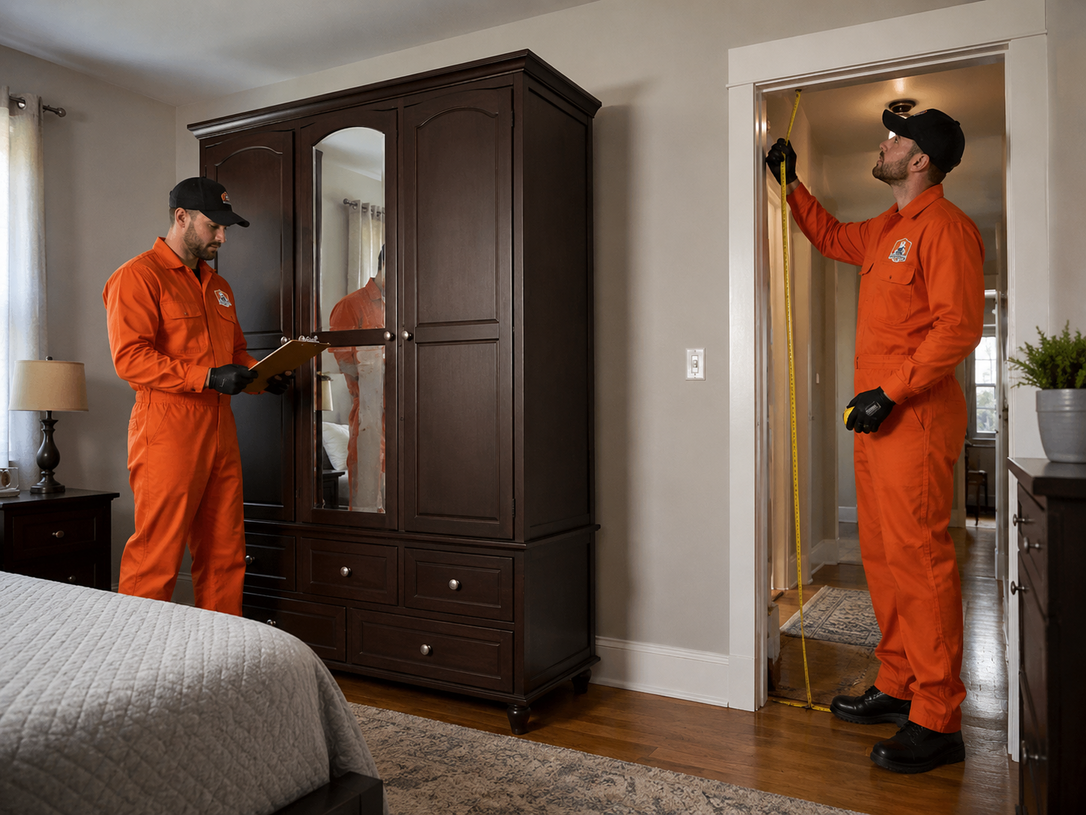
Careful Wardrobe and Armoire Moving Starts Before Lifting
Moving large wardrobes and armoires safely requires measuring the route, removing loose parts, protecting doors and corners, wrapping the finish, using proper lifting technique, and planning transport before anything leaves the room. The right approach depends on furniture size, material, age, weight, doorway width, stair layout, elevator access, storage needs, moving distance, and whether the piece is modern, antique, fragile, or part of a senior move.
- Measure every doorway, stairwell, elevator, and hallway turn before lift day.
- Protect wood finishes, mirrors, glass panels, trim, and corner edges with proper padding.
- Handle antique or sentimental armoires slowly, with extra wrapping and two-person lifts.
- Plan storage loading, senior moves, and timelines well ahead of moving day.
- Hire professional movers when the piece is heavy, tall, fragile, or hard to maneuver.
Large wardrobes and armoires often look manageable until movers face heavy hardwood frames, swinging doors, mirrored panels, loaded drawers, narrow hallways, tight stair turns, slow elevators, and uneven floor transitions. Skipping a measurement or rushing the wrap step can lead to scratched finishes, cracked trim, dinged drywall, broken hinges, loose side panels, and frustrating delays on moving day. A calmer, planned approach protects both the furniture and the home.
Two Men and Van team helps homes, apartments, storage relocations, senior assisted living transitions, and careful antique transport.
Large Wardrobes Need a Measured Moving Path
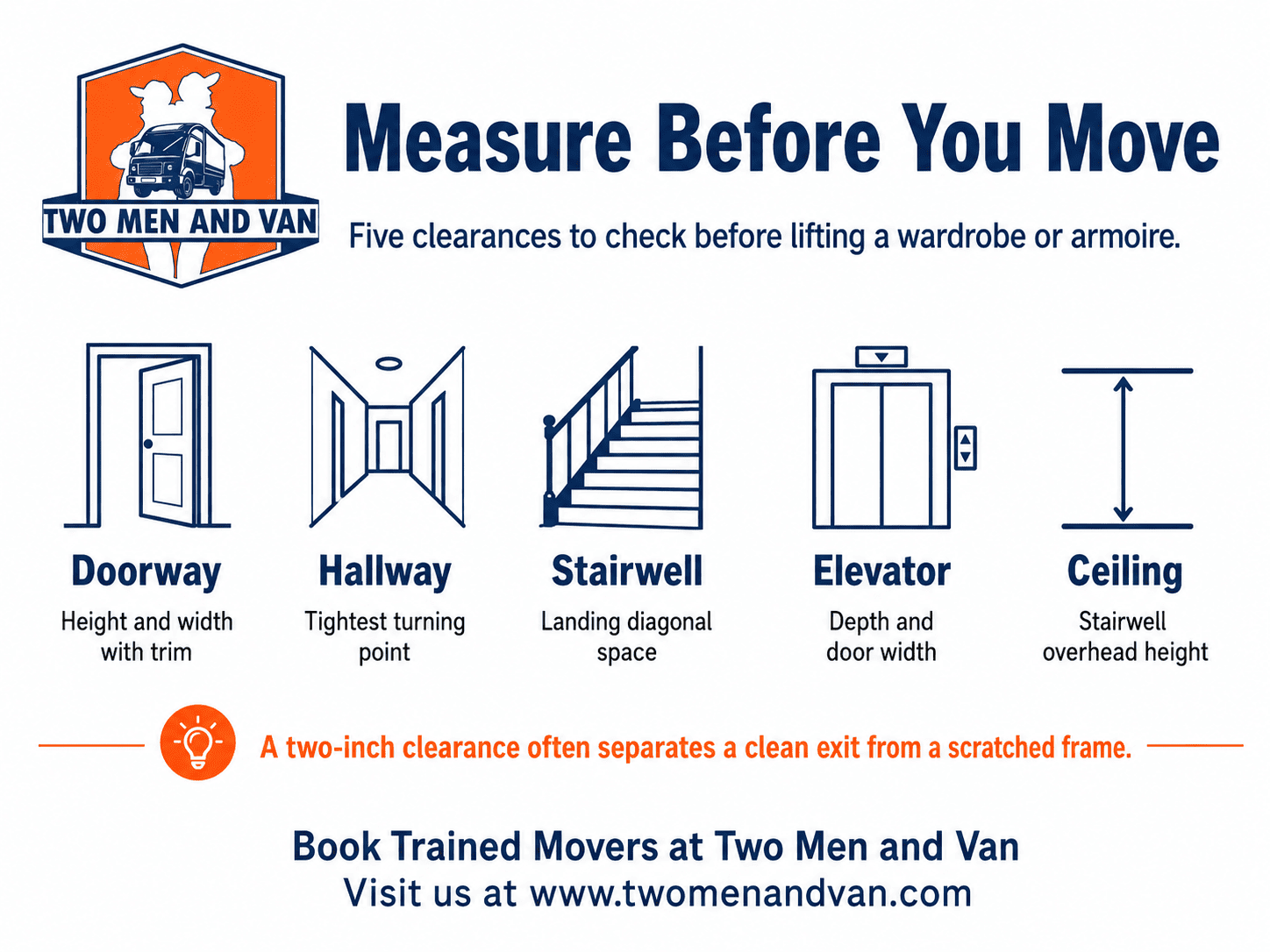
Before lifting anything, measure the wardrobe height, width, and depth, then compare those numbers to every doorway, hallway, stair turn, and elevator the piece must pass through. A two inch gap is often the difference between a smooth exit and a damaged frame.
Wardrobes in older condos and townhomes often hit trouble at the first stair landing. In apartments, the elevator depth is the usual bottleneck. Mapping the route in advance lets you decide whether the doors come off, whether the piece needs to tilt, or whether disassembly is the safer call. For complex builds, professionals offering antique furniture disassembly before moving can break the piece down without harming joinery.
Useful measurements to record:
- Doorway height and width, including trim
- Hallway width at the tightest turn
- Stair landing diagonal clearance
- Elevator interior depth and door opening
- Ceiling height in stairwells
Armoires With Doors, Drawers, and Mirrors Need Extra Protection
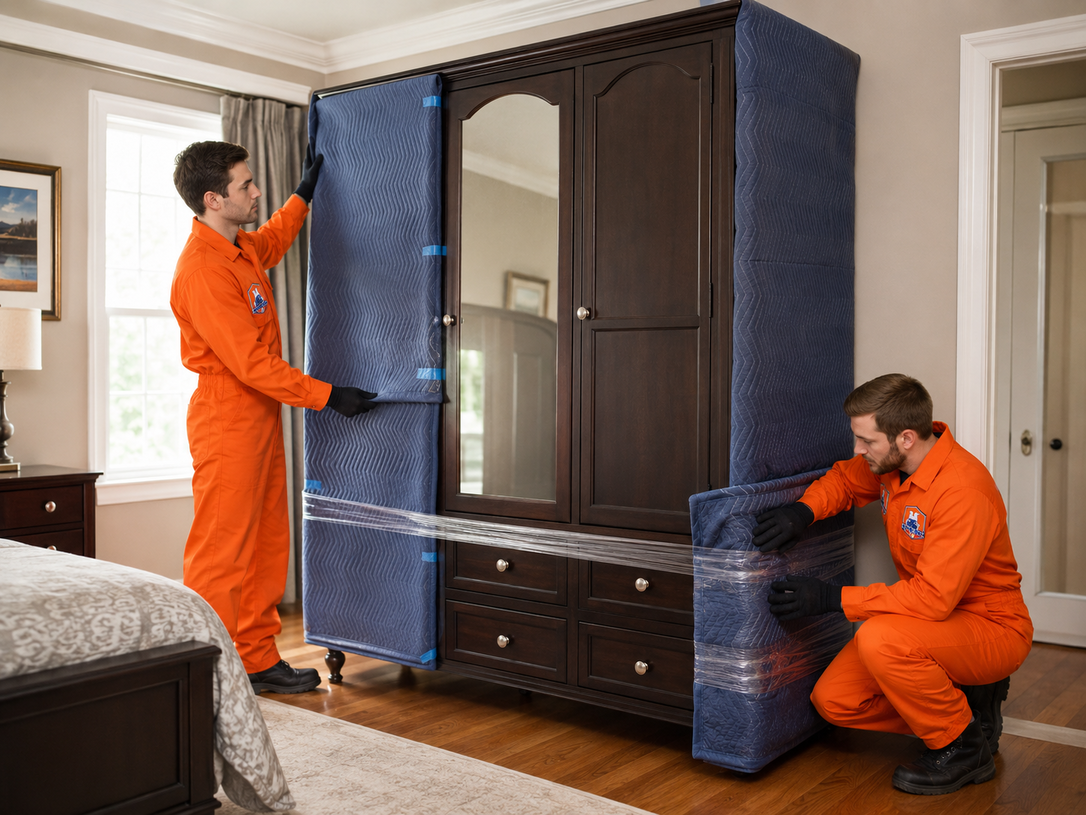
Armoires usually fail during a move at their weakest points: hinges, glass, mirrors, and decorative trim. Secure or remove every moving part, then wrap the body in moving blankets and stretch film before the lift begins.
Tape can pull lacquer off older wood, so use stretch film directly on the finish and reserve tape for the blankets. Remove drawers, secure shelves, and lock or tie doors so they cannot swing. For mirrored armoires, apply a cardboard panel over the glass before blanketing. Quality packing tools to prevent furniture damage make this step faster and more reliable than improvising with household items.
Smart wrapping order for mirrored and paneled pieces
Wrap glass first, then corners, then the full body. This layering keeps the most fragile surfaces cushioned even if the piece bumps a wall during a tight turn.
Antique Pieces Should Be Treated Like More Than Furniture
Antique armoires carry value that goes beyond resale, so they deserve slower handling, gentler wrap materials, and climate-aware transport. Acidic paper, harsh tape, and shrink wrap left on for weeks can all harm aged finishes.
For heirlooms, veneered cabinets, or hand-carved pieces, specialized fine art antique furniture movers provide custom crating and controlled transport that standard moves do not include. Federal guidance on moving liability protection for furniture is also worth reviewing before any high-value piece leaves the home, since valuation coverage and basic liability are not the same thing.
Storage Moves Require Better Wrapping and Loading Plans
Furniture headed to storage faces longer pressure on its joints, finish, and panels than furniture going straight to a new home. Wrap thoroughly, load vertically against padded walls, and never stack heavy boxes on top of wardrobe tops.
A detailed storage unit furniture moving guide helps you map the unit interior, leave airflow gaps, and keep doors accessible. For oversized armoires that will not fit through the unit door fully assembled, a furniture disassembly service for large pieces can break the body down and rebuild it on the storage shelf side.
| Move Scenario | Wrap Priority | Transport Approach |
|---|---|---|
| Local apartment move | Blankets and stretch film | Dolly with two movers |
| Antique armoire transfer | Soft cloth then padded blankets | Climate-controlled truck |
| Storage unit drop-off | Full wrap, sealed corners | Vertical load against wall |
| Senior assisted living move | Light wrap, fast placement | Direct room-to-room handling |
| Mirrored wardrobe relocation | Cardboard over glass first | Upright transport with straps |
Senior Moves Need Calm Handling and Clear Room Placement
Senior moves are about more than furniture, and a calm pace matters as much as the wrap job. Confirm the new room layout in advance so wardrobes land in their final spot without a second lift.
Retirement community hallways and assisted living suites often have tight elevator timings and protected wall corners. Coordinating senior assisted living moving help with the community staff prevents missed access windows. Helpful resources on senior move management planning guidance can also support families coordinating a parent or grandparent's transition. For move-in day, senior living furniture setup services handle reassembly so the resident sleeps comfortably the same night.
Moving Timelines Can Change the Best Furniture Plan
Wardrobe and armoire moving planning means checking furniture size, weight, doors, drawers, mirrors, wall clearance, stairs, elevators, wrapping needs, storage plans, and final room placement before the piece is moved. Timeline pressure changes every one of those choices.
Reviewing real moving timelines by home size helps families budget realistic hours for wrapping and careful handling. Local moving cost planning in Baltimore also clarifies what protective wrapping and extra crew members add to the estimate.
Scratches Usually Happen When Protection Starts Too Late
Most damage happens in the last ten feet, not on the truck. When movers grab a wardrobe before wrapping, corners catch trim, drawer faces hit door frames, and feet drag across hardwood.
Common late-protection mistakes:
- Lifting before blankets are secured
- Skipping floor runners on hardwood and tile
- Removing wrap before the piece reaches its final spot
- Leaving drawers loose during the carry
- Forgetting corner guards on walls
If damage does occur, federal records on lost or damaged moving items outline the claim path.
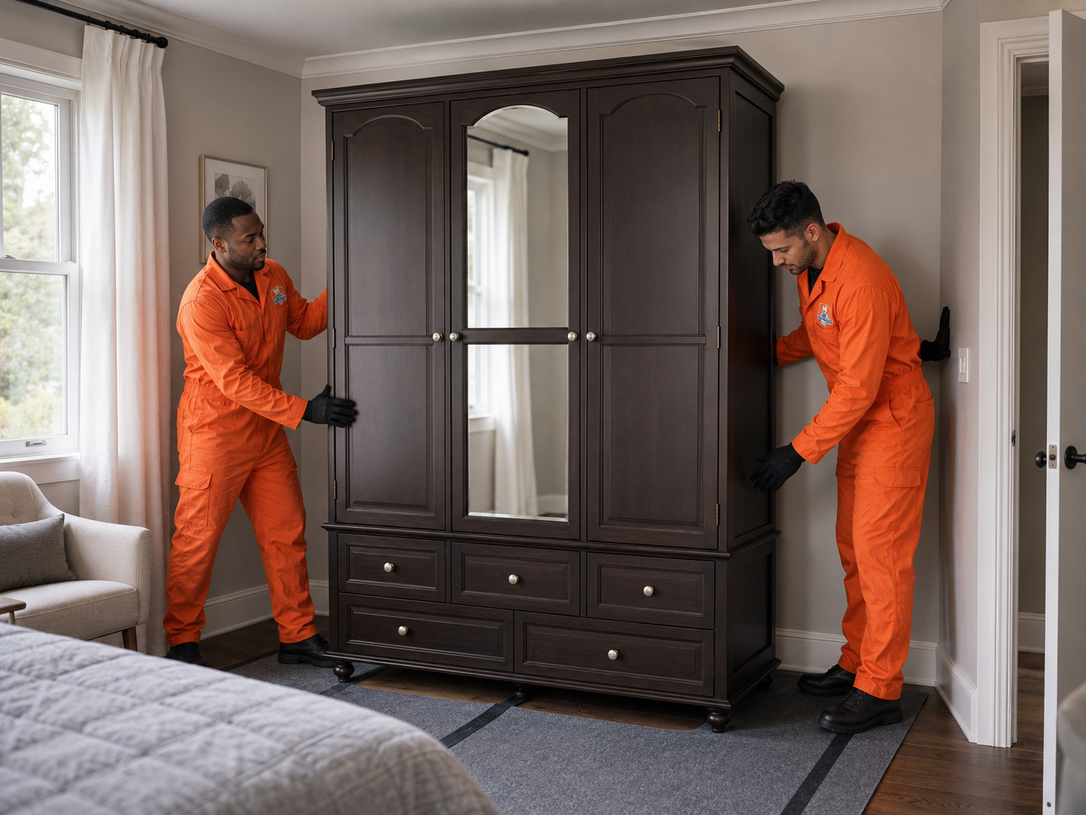
Professional Movers Help Protect Heavy Furniture and Tight Spaces
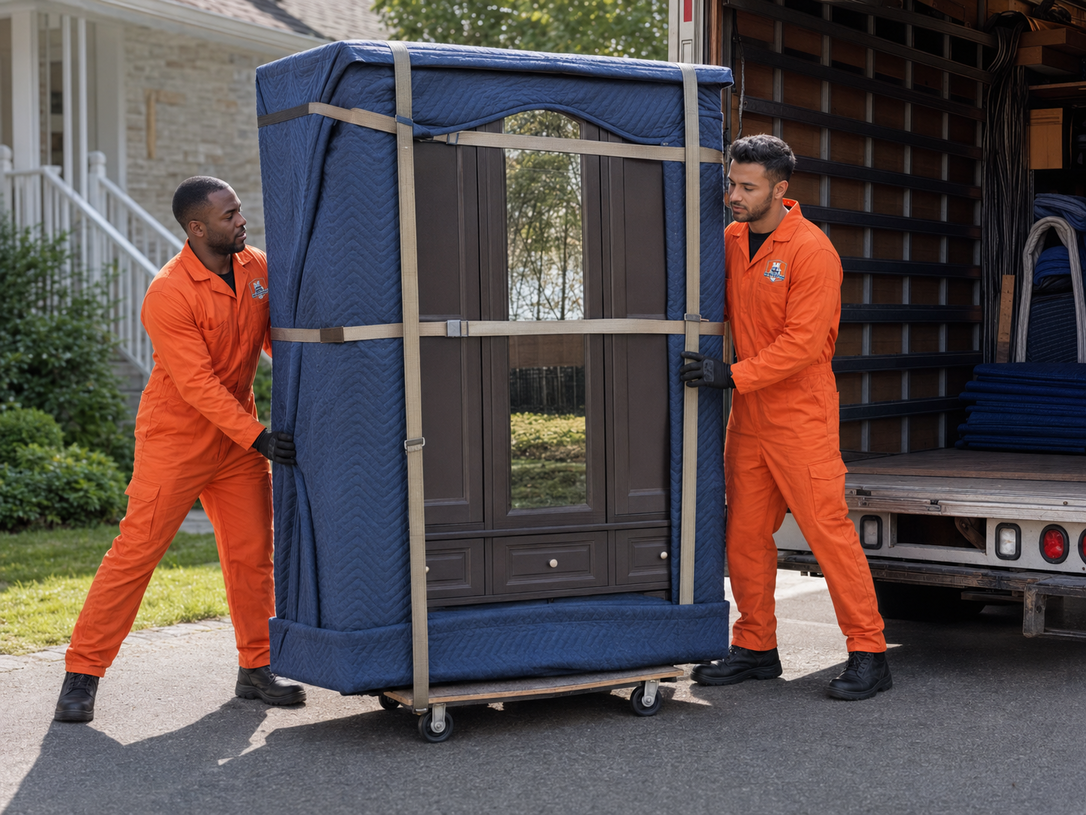
Trained crews bring lifting straps, padded dollies, corner guards, and the muscle memory to navigate tight stair turns without scuffing a wall. For heavy wood wardrobes, mirrored pieces, or anything older than the homeowner, that experience pays for itself.
Booking professional moving services for furniture covers wrapping, transport, and placement under one team. For oversized items needing dismantling, specialized disassembly and relocation service and professional moving help for heavy items round out the support most homes need.
Schedule Wardrobe and Armoire Moving Help
Safer wardrobe and armoire moving comes down to careful wrapping, scratch prevention, antique-aware handling, smart storage prep, and protected transport from doorway to final room. Two Men and Van also supports related projects, including office equipment moving for home office relocations and hoop permit planning for outdoor setups tied to your new property.
To book wardrobe moving, armoire transport, antique handling, senior assisted living support, storage moves, or full-service residential help, schedule wardrobe moving help today with a trained local crew.
Frequently Asked Questions About Moving Wardrobes and Armoires
How do you move a large wardrobe without scratching it?
Wrap the body in moving blankets first, then add stretch film over the blankets to hold padding in place. Lift with straps rather than dragging, and place floor runners along the carry path to protect both the wardrobe feet and the floors.
Should wardrobe doors be removed before moving?
Yes, if the doors are heavy, mirrored, or swing freely. Removing doors lowers the weight, prevents hinge stress, and avoids accidental swings during tight hallway turns. Label every screw and hinge so reassembly stays simple.
Can an antique armoire be moved safely?
Antique armoires can move safely with slow handling, soft cloth under the wrap, padded blankets, and a climate-controlled vehicle when possible. Two trained movers and proper lifting straps are usually the minimum for tall hardwood pieces.
How do movers protect mirrors and glass doors?
Movers tape a cardboard panel directly over the mirror, then add a blanket layer on top before stretch film. This stops cracks if the piece bumps a wall and keeps shards contained in the unlikely event of breakage.
What if a wardrobe will not fit through the doorway?
Try removing the doors and drawers first, then attempt a vertical tilt through the frame. If clearance is still tight, partial disassembly of the top crown or side panels is usually safer than forcing the piece.
Can wardrobes and armoires be moved into storage?
Yes, with full wrapping, vertical loading against padded walls, and airflow gaps to prevent moisture buildup. Avoid stacking boxes on top, and place the piece where it stays accessible if you need items during the storage period.
Are large wardrobes harder to move during senior moves?
They can be, mostly because senior moves often involve tight elevator windows, protected community hallways, and quick room placement. A calmer pace and pre-planned room layout keep stress low and prevent rushed handling.
When should I hire movers for a wardrobe or armoire?
Hire movers when the piece is taller than six feet, made of solid hardwood, mirrored, antique, or located on a floor that requires stairs or elevators. Professional crews bring straps, padding, and route planning that prevent costly damage.
Connect With Us
Stay connected with us for moving tips, customer stories, special promotions, and behind-the-scenes content. Follow Two Men and Van on social media to get helpful advice and updates on our services across Maryland, DC, Northern Virginia, Pennsylvania, and Delaware.
- Facebook - Join our community for moving tips and seasonal offers
- Instagram - See real moves, packing hacks, and customer testimonials
- Instagram Washington - Follow our Washington area team for local moving insights
Get inspired, ask questions, and see why thousands of customers trust Two Men and Van for their interstate and local moves.